

Couples who pray together daily have less than 1% divorce rate, and regular Bible reading correlates with a 25% lower divorce rate. That is not a feel-good church statistic. That is a measurable, documented reality that challenges the popular myth that Christian marriages struggle just as much as secular ones. Many believers assume that faith alone carries a marriage. But faith without the Word actively shaping daily life is incomplete. Scripture is not a decorative element in a Christian home. It is the structural foundation. This guide walks you through exactly how God's Word defines, protects, and transforms the covenant of marriage from the inside out.
Table of Contents
- Why scripture is the foundation for lasting marriage
- How scripture shapes communication and conflict in marriage
- The impact of shared scripture habits on marital stability
- Practical ways to build a scripture-centered marriage
- A deeper truth: Why modern marriages need scripture more than ever
- Start your scripture-focused marriage journey
- Frequently asked questions
Key Takeaways
| Point | Details |
|---|---|
| Scripture lowers divorce risk | Couples who read scripture and pray together regularly have significantly reduced divorce rates. |
| Guides marital roles | Biblical teachings provide clear guidance on husband and wife responsibilities. |
| Resolves conflict biblically | Scripture-based communication models promote forgiveness and unity in marriage. |
| Builds daily habits | Establishing shared scripture routines helps anchor a marriage in faith. |
Why scripture is the foundation for lasting marriage
Having challenged misconceptions about Christian marriage, the next step is grounding our understanding in the Bible itself. Scripture does not merely suggest principles for a good marriage. It defines what marriage is, who it is for, and what it is meant to accomplish before God.
Genesis 2:24 declares: "Therefore shall a man leave his father and his mother, and shall cleave unto his wife: and they shall be one flesh." This is not poetry. This is covenantal architecture. Marriage was designed by God before the fall, before the Law, before any human institution shaped it. That origin matters enormously.
Ephesians 5 builds on this foundation with clarity about roles. The husband is called to love his wife as Christ loved the church, sacrificially and completely. The wife is called to submit to her husband as unto the Lord. These are not cultural suggestions. They are doctrinal commands rooted in the relationship between Christ and His body. Understanding the husband's role in marriage through scripture prevents couples from importing the world's definitions into their home.
Matthew 19:6 adds the Lord's own words: "What therefore God hath joined together, let not man put asunder." Marriage is a divine joining. That changes everything about how conflicts, temptations, and seasons of difficulty are to be approached.
Here is what regular scripture engagement does for a marriage:
- It anchors both spouses to a standard outside themselves
- It defines roles with clarity, removing confusion about authority and service
- It provides a shared language for navigating disagreement
- It connects the marriage to eternal purpose, not just daily comfort
- It guards against cultural drift, which is the quiet erosion of biblical values
Understanding biblical headship is not about control. It is about order, protection, and sacrificial love modeled after Christ Himself.
"Thy word is a lamp unto my feet, and a light unto my path." Psalm 119:105. That lamp illuminates the marriage path when emotions cloud judgment and culture offers a thousand wrong directions.
Pro Tip: Choose one core marriage verse together, such as Ephesians 5:25 or Genesis 2:24, write it somewhere visible in your home, and recite it aloud during moments of tension. It reorients the heart faster than any argument.
How scripture shapes communication and conflict in marriage
Now that the biblical foundation is clear, let's see how scripture shapes the daily realities of communication and conflict between spouses. This is where doctrine meets the kitchen table.
James 1:19 commands: "Let every man be swift to hear, slow to speak, slow to wrath." Three directives. One verse. Applied consistently, this single passage could prevent the majority of marital arguments before they escalate. Proverbs 15:1 reinforces it: "A soft answer turneth away wrath: but grievous words stir up anger." Scripture does not just tell you what not to do. It tells you what to do instead.
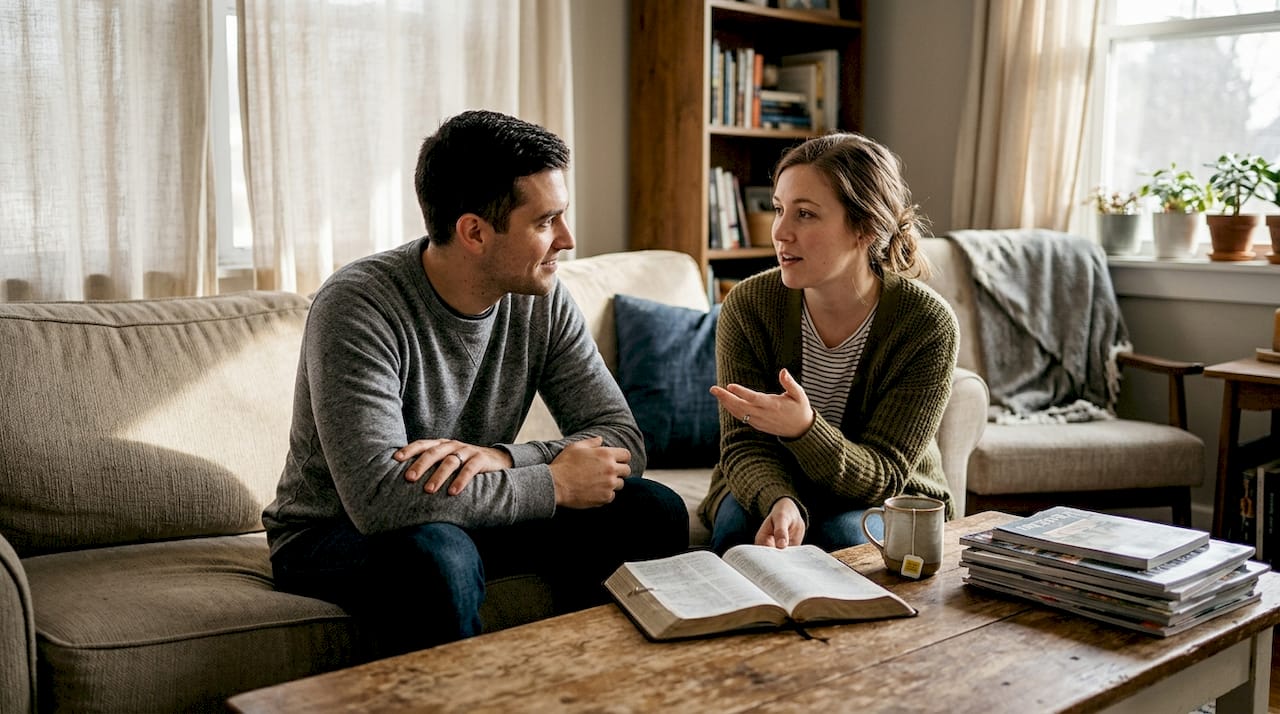
Ephesians 4:32 adds the forgiveness dimension: "And be ye kind one to another, tenderhearted, forgiving one another, even as God for Christ's sake hath forgiven you." Forgiveness in marriage is not optional. It is commanded. And it is modeled after the highest act of grace in history.
Couples who pray together report more than 90% marital satisfaction. That number should stop you cold. Nine out of ten couples who build scripture and prayer into their relationship report being genuinely satisfied in their marriage. That is not luck. That is the fruit of a Word-centered covenant.
Here is a biblical framework for handling marital conflict, drawn from Matthew 18 and the broader counsel of scripture:
- Pause before responding. Apply James 1:19 in real time. Take a breath. Pray silently if needed.
- Speak directly and privately. Matthew 18:15 instructs going to your brother alone first. The same applies in marriage. Do not involve others prematurely.
- State the issue without accusation. Use "I" statements rooted in how you feel, not sweeping declarations about your spouse's character.
- Seek reconciliation, not victory. The goal is restored unity, not winning. Ephesians 4:3 calls believers to keep "the unity of the Spirit in the bond of peace."
- Pray together before closing the conversation. This single act reestablishes that both spouses are on the same side.
The Covenant Conversation Guide provides structured, scripture-rooted tools for couples who want to move beyond surface-level communication. Pairing it with consistent daily devotional practices creates the kind of spiritual rhythm that transforms how you speak to each other.
Pro Tip: Before a difficult conversation, read one conflict-related verse together and pray briefly. It takes less than two minutes and changes the entire atmosphere of the discussion.
The impact of shared scripture habits on marital stability
With practical communication in place, examining the research highlights just how transformative shared scripture habits can be. The numbers are not subtle.
Weekly Bible reading and church attendance lower divorce rates by 25 to 50 percent. These are not marginal improvements. They represent a dramatic shift in marital outcomes tied directly to scripture engagement. The habits that produce these results are specific:
- Daily prayer together: Even five minutes of shared prayer builds spiritual intimacy and mutual accountability
- Weekly Bible reading: Consistent engagement with God's Word recalibrates both spouses to a shared authority
- Regular church attendance: Corporate worship and biblical teaching reinforce what is practiced at home
- Scripture memorization: Hiding the Word in your heart gives both spouses tools to draw from in moments of pressure
Here is a clear comparison of outcomes based on scripture habit engagement:
| Habit | With Regular Engagement | Without Regular Engagement |
|---|---|---|
| Divorce rate | Less than 1% (daily prayer) | National average near 40-50% |
| Marital satisfaction | Over 90% reported | Significantly lower |
| Conflict resolution | Scripture-guided, purposeful | Emotionally reactive |
| Shared purpose | Eternal, covenant-based | Circumstantial, shifting |
| Spiritual intimacy | Actively cultivated | Often absent |
The contrast is stark. Couples who treat scripture as a living, active part of their marriage are not just statistically better off. They are operating within the design God intended for the covenant.
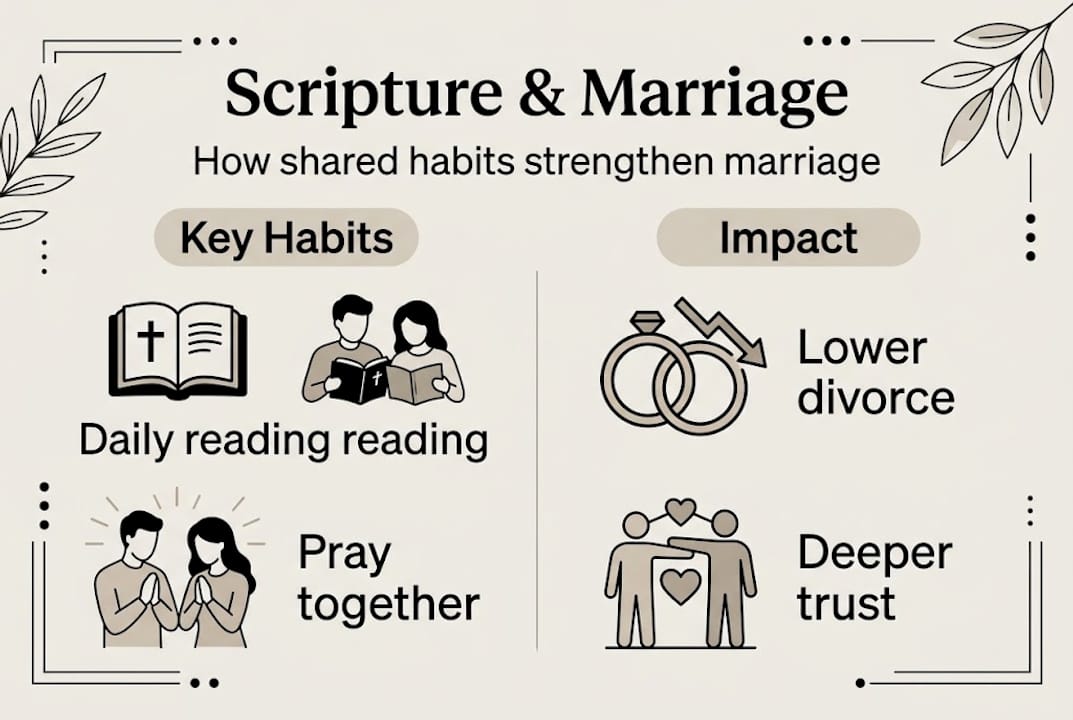
Exploring Dead Hidden's marital resources and the broader biblical marriage tips available through the platform gives couples a structured path toward these outcomes. The data points to scripture. The scripture points to God. And God designed marriage to reflect His glory.
Practical ways to build a scripture-centered marriage
Having seen the evidence and core principles, here is how to make scripture the center of your marriage starting today. Not someday. Today.
Daily scripture engagement correlates directly with stronger marital satisfaction and lower divorce rates. The habits that produce this are learnable and sustainable. Here is a numbered plan to get you started:
- Choose a reading plan designed for couples. Select a yearly Bible reading plan that both spouses commit to. One-year chronological plans or thematic marriage-focused plans work well. The key is that both spouses are reading the same text.
- Set a consistent devotional time. Morning works best for most couples, before the day's demands crowd out spiritual priorities. Even fifteen minutes of shared reading and brief discussion builds a powerful habit over time.
- Establish a daily prayer routine. Pray together at a fixed time. Morning, evening, or both. Pray for each other by name. Pray over your marriage, your home, and your children if you have them.
- Memorize one verse per month together. Write it on a card, review it daily, and discuss its application to your marriage. Over a year, you will have twelve anchors to draw from.
- Use structured resources. Devotionals, study guides, and reading plans designed with a biblical framework accelerate growth and prevent drift. The biblical decision-making system from Dead Hidden equips couples to bring scripture into choices large and small.
- Review your habits weekly. Ask each other: Did we read together this week? Did we pray? What verse stood out? Accountability between spouses is itself a biblical practice.
Pro Tip: At the start of each year, sit down together and select a yearly Bible reading plan. Check in every Sunday evening for five minutes to share one thing God showed you that week. This single habit compounds powerfully over months.
A deeper truth: Why modern marriages need scripture more than ever
With practical tools in hand, it is time to reflect on the deeper cultural forces threatening biblical marriage today. And we need to be honest about what we are facing.
Modern culture does not merely challenge marriage. It systematically dismantles the biblical framework that makes marriage coherent. Roles are mocked. Headship is called oppression. Submission is treated as weakness. And many believing couples, without realizing it, have absorbed these ideas. They hold biblical values in theory while practicing a diluted, culturally shaped version of marriage in daily life.
This is the uncomfortable truth: the biggest breakthroughs in marriage do not come from better communication techniques or weekend retreats. They come when scripture stops being a reference point and becomes the driving force behind every action, reaction, and decision. Understanding true biblical headship is one place where that transformation begins. When both spouses submit to the Word above their own preferences, the marriage stops being a negotiation and becomes a covenant lived outward.
Start your scripture-focused marriage journey
If you are ready to transform your marriage with God's Word, it helps to have a trusted roadmap and community behind you.

Dead Hidden has developed resources specifically for couples who refuse to settle for a culturally compromised version of Christian marriage. The Biblical Womanhood reading plan equips wives with verse-by-verse teaching on their God-given calling. The Biblical Masculinity resource calls husbands into the full weight and honor of their covenant role. Together, these resources create a shared biblical vocabulary that strengthens the marriage from the inside out. Explore the full library at Dead Hidden Ministries and take the next step toward a scripture-centered marriage that reflects God's design.
Frequently asked questions
Does the Bible really help lower divorce rates in marriage?
Yes. Weekly Bible reading correlates with 25 to 50 percent lower divorce rates, and couples who pray together daily experience divorce rates below 1 percent.
What are easy ways to start reading scripture together as a couple?
Begin with a short daily reading plan, pray together over one verse, and briefly discuss what stood out. Consistency matters more than length.
Which Bible verses are most important for establishing a Christian marriage?
Genesis 2:24, Ephesians 5, and Matthew 19 form the doctrinal core of biblical marriage, covering covenant, roles, and the permanence of the union.
How does scripture help during conflict or disagreement?
Scripture gives couples a shared authority above their own emotions, guiding them toward gentle speech, forgiveness, and reconciliation. Couples who study scripture together report over 90 percent marital satisfaction, even through seasons of conflict.
Recommended
- What Does the Bible Say About a Husband's Role? (The Full Picture) | Dead Hidden | Dead Hidden Ministries
- Biblical Headship: What the KJV Actually Teaches (And What Your Church Got Wrong) | Dead Hidden | Dead Hidden Ministries
- Blog — Biblical Truth, Masculinity & Marriage | Dead Hidden | Dead Hidden Ministries
- HOW TO FIND A GODLY MAN | Dead Hidden