

Most sincere believers want to study the Bible deeply, yet many sit down with an open Bible and feel lost within minutes. Where do you begin? What translation do you trust? How do you know your interpretation is sound? These are not small questions. They are the difference between spiritual growth and doctrinal confusion. A well-constructed Bible study checklist does not replace the Holy Spirit's illumination, but it does provide the structure your study sessions desperately need. This guide maps out a practical, doctrinally grounded framework to bring clarity, consistency, and conviction to every session you open the Word.
Table of Contents
- Core criteria for effective Bible study preparation
- Step-by-step Bible study checklist for doctrinal clarity
- Comparing Bible study checklists: Strengths and focuses
- Situational checklist recommendations: Choosing for your group or need
- A fresh perspective: Why checklists don't replace discipleship
- Explore deeper study resources from Dead Hidden
- Frequently asked questions
Key Takeaways
| Point | Details |
|---|---|
| Preparation matters | Intentional preparation before Bible study leads to deeper understanding and spiritual growth. |
| Step-by-step clarity | A structured checklist ensures doctrinal accuracy and consistent study outcomes. |
| Tailored frameworks | Adapt Bible study checklists for different groups and objectives to maximize engagement. |
| Discipleship essential | Checklists are helpful tools but must be paired with Spirit-led discipleship for true transformation. |
| Explore resources | Reviewed guides and manuals from Dead Hidden can support your Bible study journey. |
Core criteria for effective Bible study preparation
Before you open a single chapter, preparation matters. Preparation leads to more fruitful study sessions, and that truth is not merely organizational wisdom. It is the difference between a study session that transforms and one that merely informs. Every serious student of Scripture must settle certain foundational matters before the study begins.
Here are the core criteria you must have in place:
- Choose the right Bible translation. Not all translations carry equal doctrinal weight. The King James Version remains the gold standard for conservative, dispensationalist study because of its textual fidelity and precise language. Modern paraphrases introduce interpretive bias that can corrupt doctrinal conclusions before you even begin.
- Set doctrinal objectives. Know what you are studying and why. Are you building a theology of salvation? Examining prophetic passages? Studying the roles of men and women in Scripture? Clarity of purpose sharpens your focus.
- Prepare an intentional prayer environment. This is not ceremonial. Prayer before study is an act of submission to the Author of Scripture. Ask for discernment. Ask for illumination. The natural man cannot receive the things of the Spirit (1 Corinthians 2:14), so you must come in dependence.
- Plan for time and consistency. Sporadic study produces shallow roots. Schedule specific, recurring time blocks. Thirty focused minutes daily outperforms three hours once a week.
- Gather your tools. A Strong's Concordance, a doctrinally sound commentary, a cross-reference Bible, and a study journal are your baseline toolkit.
Pro Tip: Select a translation that aligns with your doctrinal standards from the start. Switching translations mid-study introduces unnecessary confusion and can dilute the precision of your doctrinal conclusions.
Studies consistently show that believers who enter study with defined goals and prepared environments report measurably greater comprehension and spiritual application. Structure is not legalism. Structure is stewardship of the time God has given you.
Step-by-step Bible study checklist for doctrinal clarity
Structured study steps enhance doctrinal accuracy, and a numbered checklist gives you a repeatable process that removes guesswork from every session. Follow this sequence with discipline.
- Open with prayer for discernment. Before reading a single word, ask the Lord to guard your understanding and reveal truth. This is not optional.
- Read the passage slowly, at least three times. First for familiarity. Second for observation. Third for detail. Rushing through Scripture is one of the most common and costly mistakes believers make.
- Identify key terms and concepts. Mark words that carry theological weight. Words like justified, sanctified, propitiation, and covenant are not interchangeable with casual synonyms.
- Consult doctrinally aligned commentaries. Not every commentary is trustworthy. Use resources that hold to a high view of Scripture and a literal, grammatical, historical method of interpretation.
- Cross-reference related passages. Scripture interprets Scripture. Use your cross-reference Bible or concordance to find parallel passages. Context is not just the surrounding verses. It is the whole counsel of God.
- Write your observations and conclusions. A study journal forces precision. Vague impressions become clear convictions when you write them down.
- Apply the passage to your life. Ask: What does this passage demand of me? What must I believe? What must I do? What must I stop doing?
Pro Tip: Use a KJV study method that filters every interpretation through the lens of the received text. This guards against the doctrinal drift that plagues modern study approaches.
This checklist is not a formula. It is a framework. The goal is not to complete a list. The goal is to encounter the living God through His written Word.

Comparing Bible study checklists: Strengths and focuses
Not every checklist serves the same purpose. Checklists vary in doctrinal focus and usability, and understanding those differences helps you select the right tool for your context. Some frameworks prioritize broad reading coverage. Others go deep on doctrine. A few are designed for specific audiences like men, women, or youth groups.
Here is a comparison of common Bible study checklist frameworks:
| Checklist framework | Primary strength | Doctrinal focus | Best for |
|---|---|---|---|
| General reading plan | Breadth of coverage | Low to moderate | New believers, broad survey |
| Verse-by-verse study | Depth and precision | High | Mature students, doctrine |
| Topical study checklist | Theme-based clarity | Moderate | Teaching prep, group study |
| 2026 reading protocol | Structured annual coverage | High | Committed, disciplined students |
| Biblical womanhood plan | Gender-specific application | High | Women's groups and individuals |
Key observations from this comparison:
- General reading plans build familiarity but often lack the doctrinal rigor needed for theological precision.
- Verse-by-verse frameworks are the most demanding but produce the deepest understanding.
- Topical checklists work well for group settings where a theme anchors discussion.
- Audience-specific plans, like those designed for biblical womanhood, address the unique spiritual responsibilities Scripture assigns to women.
Research among committed Bible students shows that those who use a structured, doctrine-oriented checklist report significantly stronger comprehension and confidence in their scriptural interpretations compared to those who study without a framework. The structure does not constrain the Spirit. It creates the conditions for the Spirit to work with clarity.
Situational checklist recommendations: Choosing for your group or need
Adapting checklists for group or individual use increases engagement, and the right checklist for a men's accountability group looks very different from the right checklist for a women's Bible study or a youth discipleship class. Matching the framework to the audience is not a concession to preference. It is wisdom.
Here is how to approach checklist selection by group:
- Men's Bible study groups: Prioritize doctrinal rigor, accountability structures, and application to leadership, work, and spiritual warfare. The man field manual approach equips men to study with purpose and masculine conviction.
- Women's Bible study groups: Focus on passages addressing biblical femininity, submission, prayer, and household faithfulness. Use checklists that connect doctrine to daily life in the home and church.
- Youth groups: Simplify the checklist without compromising doctrinal content. Emphasize observation and application. Build the habit of consistent study before adding complexity.
- Mixed groups or Sunday school classes: Use a general framework with doctrinal guardrails. Ensure cross-referencing is built into every session to prevent surface-level interpretation.
Here is a practical data table for situational guidance:
| Group type | Recommended checklist style | Key adaptation needed |
|---|---|---|
| Men's group | Doctrine-heavy, leadership-focused | Add accountability questions |
| Women's group | Application-rich, biblically feminine | Connect to home and church roles |
| Youth group | Simplified, habit-forming | Shorten steps, increase discussion |
| Mixed adult group | Balanced, cross-reference driven | Add doctrinal filter questions |
| Individual study | Verse-by-verse, journaled | Personalize application section |
The woman field manual provides a strong model for women's group adaptation, grounding study in the specific scriptural responsibilities God has assigned to women.
Pro Tip: Review and update your checklist every quarter. As your group matures doctrinally, your checklist should grow in depth and specificity. A checklist that served you six months ago may be too shallow for where you are today.
A fresh perspective: Why checklists don't replace discipleship
Here is the uncomfortable truth most productivity-minded believers need to hear: a checklist cannot sanctify you. It never could. We have seen believers work through every item on a rigorous study checklist and still walk away unchanged, because information without application is spiritual stagnation. The checklist is a tool. It is not the teacher.
True biblical literacy is cultivated in community, through accountability, through the hard work of studying the Bible deeply with people who will challenge your conclusions and hold you to the text. A checklist gives you the map. Discipleship is what actually moves your feet.
We have seen this pattern repeatedly: the believer who studies alone with a perfect checklist often drifts. The believer who studies imperfectly but within a community of accountability grows. Neither the checklist nor the community alone is sufficient. You need both. The Word of God is living and powerful (Hebrews 4:12), and it does its deepest work when you are submitted to it in relationship with others who love it as fiercely as you do.
Pro Tip: Pair your checklist with a discipleship partner or small group. Review your study notes together weekly. Accountability transforms information into transformation.
Explore deeper study resources from Dead Hidden
If you are serious about taking your Bible study beyond surface-level reading, Dead Hidden has built the resources to get you there.
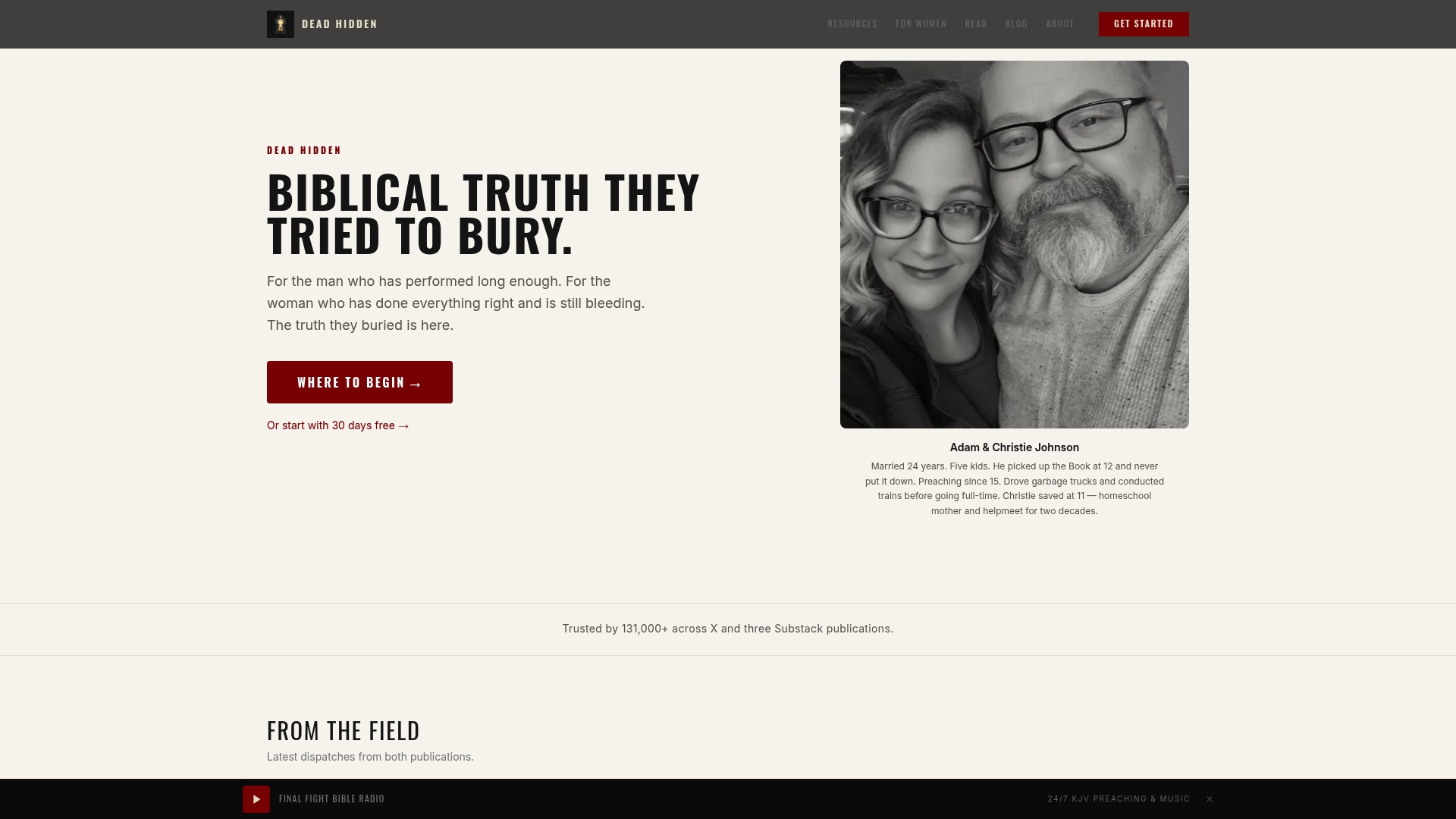
Start with the guide on studying the Bible like your life depends on it, a no-compromise resource built for believers who want doctrinal precision and spiritual depth. If you are committed to a full year of structured reading, the 2026 Bible reading plan provides a disciplined, doctrinally grounded path through Scripture. For men seeking to study with purpose and conviction, the Biblical Man Field Manual delivers a framework built on biblical masculinity and serious scriptural engagement. These are not generic study aids. They are precision tools for serious students of the Word.
Frequently asked questions
What is the best checklist for Bible study beginners?
A beginner checklist should include prayer, a slow reading of the passage, key concept identification, and written notes. Preparation steps simplify study for beginners, so start with four to five steps and build from there as your confidence grows.
How can checklists help avoid doctrinal confusion?
Structured checklists encourage cross-referencing and the use of sound commentaries, which minimizes misinterpretation. Checklists reduce doctrinal confusion by forcing you to verify conclusions against the broader counsel of Scripture rather than relying on a single verse.
Should Bible study checklists be different for men and women?
Distinct checklists for men and women can target the unique spiritual responsibilities Scripture assigns to each, but both must prioritize doctrinal accuracy above all. Checklists can be tailored by group without compromising the authority or sufficiency of Scripture.
What are the top mistakes to avoid in Bible study checklists?
Avoid neglecting prayer before study, skipping context and cross-reference checks, and treating the checklist as a substitute for genuine discipleship. Discipleship must supplement checklists because no framework alone produces the transformation that only the Spirit and community can bring.
Recommended
- How to study the Bible for doctrinal clarity: 5 steps
- How to Study the Bible in the KJV: A Step-by-Step Method That Actually Works | Dead Hidden | Dead Hidden Ministries
- HOW TO STUDY THE BIBLE LIKE YOUR LIFE DEPENDS ON IT | Dead Hidden
- Blog — Biblical Truth, Masculinity & Marriage | Dead Hidden | Dead Hidden Ministries
- Master your reading habits for deeper book enjoyment