

Sound doctrine does not form by accident. Even sincere, devoted believers with years in the Word can drift into interpretive error when their study methods lack structure and discipline. Misreading a passage, importing foreign assumptions, or skipping straight to application before careful observation — these are not merely academic mistakes. They produce doctrinal instability, personal confusion, and sometimes outright heresy. Scripture is God's revealed Word, and it deserves the most rigorous, humble engagement you can bring to it. The tips below are not surface-level suggestions. They are field-tested, doctrinally grounded disciplines that will sharpen your accuracy and deepen your confidence in what the text actually says.
Table of Contents
- Establish a reliable framework: The grammatical-historical-literal method
- Focus your study: One book at a time, read repeatedly
- Avoid eisegesis: Commit to observation before interpretation
- Apply inductive study: Observe, interpret, and only then apply
- Why most Bible study accuracy tips fall short — and what few churches teach
- Take your Bible study accuracy further with Dead Hidden resources
- Frequently asked questions
Key Takeaways
| Point | Details |
|---|---|
| Use a sound framework | Adopting the grammatical-historical-literal method keeps interpretation anchored in original meaning. |
| Master one book at a time | Focusing on a single book and reading it repeatedly prevents doctrinal confusion and increases understanding. |
| Delay interpretation to avoid bias | Observing scripture before consulting commentaries protects against imposing personal or cultural ideas. |
| Follow the inductive process | Careful observation, interpretation, then application is proven to yield more accurate study outcomes. |
Establish a reliable framework: The grammatical-historical-literal method
Every Bible student operates from some interpretive framework, whether they know it or not. The question is whether yours is trustworthy. The grammatical-historical-literal method is the bedrock of conservative, doctrinally sound interpretation. Let's unpack each term.
Grammatical means you study the actual words, their syntax, tense, and original language meaning. Historical means you anchor the text in its original setting, audience, author, and cultural context. Literal means you take the text at face value, recognizing figures of speech as figures of speech, but resisting the urge to spiritualize or allegorize what is meant to be read plainly.
Why does this matter so much? Because without this anchor, the text becomes elastic. You can make it say almost anything. And many do.
Contrasting approaches deserve an honest look. Progressive and liberal hermeneutic lenses often prioritize cultural inclusion or therapeutic application over what the text plainly states, subordinating literal inerrancy to contemporary agendas. That path leads to doctrinal corruption. Conservative believers must guard against it deliberately.
Here is how to start applying this method in practice:
- Observe first: Read the passage slowly, noting every word choice and repeated term.
- Identify the genre: Is this prophecy, epistle, poetry, or historical narrative? Genre shapes how you read.
- Establish context: Who wrote it? To whom? Under what circumstances?
- Ask the author's intent: What was this writer communicating to his original audience?
- Resist modern import: Guard against reading 21st-century assumptions back into 1st-century or Old Testament texts. This backward imposition is called eisegesis (reading meaning into the text rather than drawing it out), and it is the most common error in popular Bible teaching today.
"Take the Bible at face value, recognize literary genres, and interpret according to its grammar and original context." This is the foundation of any sound study method.
For more on building doctrinal clarity steps into your regular practice, these principles provide the necessary starting point. You can also explore the KJV study method for a framework tailored specifically to the King James Version. If you need additional Bible study alternatives, there are several worthy options to evaluate.
Pro Tip: Before reading a single commentary, write out the passage in your own words based on what the grammar and context reveal. This exercise forces genuine engagement with the text on its own terms.
With a foundational understanding of why a reliable interpretive method matters, let's look at practical study habits that sustain accuracy.
Focus your study: One book at a time, read repeatedly
One of the most neglected disciplines in modern Bible study is the practice of sustained immersion in a single book. Most believers jump from passage to passage, chasing topical themes or following a devotional plan that scatters their attention across the entire canon. The result? Shallow familiarity without real understanding.

The prescription is simple but demanding: study one book at a time, reading it repeatedly before consulting outside sources. There is no shortcut to this.
Consider what this looks like in practice:
- Choose a single book. Shorter epistles like Colossians or Philippians are excellent starting points for newer students. Longer books like Romans or Isaiah reward deeper commitment.
- Read it in one sitting if possible. This preserves the author's argument and flow, which context-jumping destroys.
- Sketch themes and repeated words. What ideas keep returning? What vocabulary does the author favor? These patterns are the author's own interpretive keys.
- Do this multiple times before consulting any commentary. Three to five readings before opening a study Bible or cross-reference is not excessive. It is wise.
- Resist the commentary temptation. Commentaries are valuable, but they impose someone else's conclusions before you have drawn your own. Give yourself the chance to observe first.
This approach directly counters the epidemic of biblical illiteracy that plagues the modern church. When you master one book's context, every passage within it becomes dramatically clearer. The surrounding verses interpret the difficult ones.
"Read the entire book multiple times before consulting outside helps. Let the text speak before you let others speak about it."
Using a practical study checklist can help you track your observations and prevent the common habit of rushing forward before the text is fully absorbed.
Once you have a strong framework, the next priority is developing consistent habits for deep comprehension.
Avoid eisegesis: Commit to observation before interpretation
Eisegesis and exegesis are two words every serious Bible student must know. Exegesis means drawing meaning out of the text based on what it actually says. Eisegesis means reading your own assumptions, preferences, or cultural biases into the text. One honors scripture. The other quietly replaces it with your own voice.
Here is a direct comparison to make the distinction concrete:
| Exegesis | Eisegesis | |
|---|---|---|
| Starting point | The text itself | Personal belief or preference |
| Question asked | What does this say? | How does this support what I think? |
| Result | Accurate doctrine | Confirmation bias |
| Posture | Submission to scripture | Subtle self-authority |
The temptations toward eisegesis are subtle. Watch for these warning signs in your own study:
- Reaching for a familiar verse to prove a point before reading the whole passage
- Skipping verses that complicate your interpretation
- Assuming a word means what it means today, ignoring original language meaning
- Reading emotional or cultural experience into a text rather than historical context
Delaying commentaries until after personal observation is one of the most powerful guards against eisegesis. When you read a commentary first, you unconsciously see the text through that author's eyes.
Pro Tip: Ask these three observational questions before forming any interpretation. Who is speaking? To whom? About what? These basic anchors prevent the most common self-insertion errors.
When you are ready to consult outside voices, look for commentaries grounded in the grammatical-historical method, written by authors who honor inerrancy and use original language study. For more on how study guide benefits compound over time, this discipline is where lasting accuracy is built or lost.
Developing mastery over a single book still leaves a major threat to accuracy: subtle bias and self-insertion.
Apply inductive study: Observe, interpret, and only then apply
The inductive Bible study method is one of the most time-honored and rigorous approaches in evangelical scholarship. Its strength lies in its insistence on sequential discipline. You cannot shortcut the steps without paying a doctrinal price.
The three stages are:
- Observe: What does the text actually say? This is purely descriptive. Note every word, structure, repeated phrase, and grammatical nuance. Record what you see, not what you feel.
- Interpret: What does the text mean? Having observed carefully, you now ask what the author intended. This is where grammar, context, and historical background all converge.
- Apply: How should I live in light of this truth? Application comes last. Always. Not first, not simultaneously.
Here is the painful reality: studies tracking biblical illiteracy in churches show that the majority of churchgoers rush directly to application, skipping or collapsing the observation and interpretation steps entirely. The result is practical Christianity untethered from doctrinal accuracy.
| Approach | Step 1 | Step 2 | Step 3 | Risk |
|---|---|---|---|---|
| Application first | Feel/react | Apply | Justify | High error |
| Inductive | Observe | Interpret | Apply | Doctrinally sound |
Patience is not just a virtue in inductive study. It is the method itself. You cannot hurry the interpretation stage without losing accuracy. This is also where humility becomes non-negotiable. The text is not yours to shape. You are its student, not its editor.
For those ready to build a full-year discipline around this, the 2026 reading protocol offers a structured framework for sustained, accurate engagement with the whole canon.
To cement accuracy, you need a tested, repeatable method for moving from text through meaning to relevance without short-circuiting the process.
Why most Bible study accuracy tips fall short — and what few churches teach
Here is what we have observed across years of teaching: most accuracy tips circulating in popular Christian culture focus on tools rather than foundations. They tell you which app to use, which translation to read, which commentary to buy. But they rarely address the deeper issue: the posture of the student before the text.
The disciplines that actually produce long-term doctrinal stability are the unglamorous ones. Waiting before applying. Reading a book five times before opening a commentary. Sitting in honest uncertainty until the text yields its meaning. These are not marketable habits. They require something the modern church rarely cultivates: structured humility.
Conservative, grammatical-historical methods work precisely because they force the student into submission to the text rather than authority over it. The Holy Spirit works through careful, patient study, not bypassing it. What few churches teach is this: accuracy is not a gift. It is a discipline. And it is available to every believer willing to slow down long enough to let the Word speak on its own terms. Explore more biblical truth articles to continue building that foundation.
Take your Bible study accuracy further with Dead Hidden resources
If these principles have stirred your commitment to accuracy, the next step is putting them into practice with tools built specifically for that purpose.
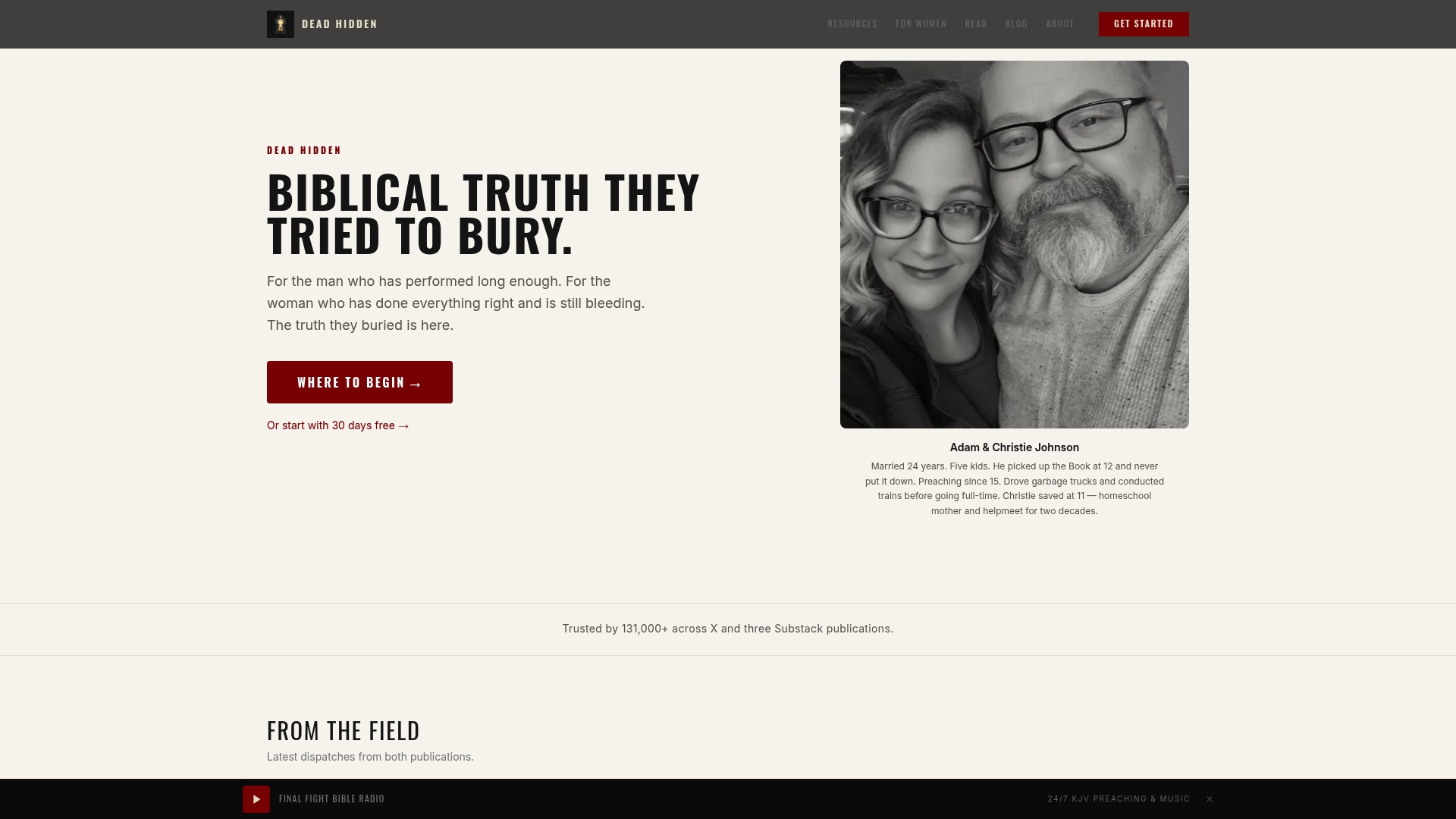
Dead Hidden's curated resources are not generic devotional content. They are structured, accuracy-focused study tools designed for believers who refuse to settle for surface-level understanding. The study Bible guide walks you through foundational method step by step. If you're starting your doctrinal journey, the hidden truths starter is where that foundation is laid. And for those who want to integrate scripture into every area of spiritual strength, the warrior's blueprint provides the framework. These are not shortcuts. They are the right tools for serious students.
Frequently asked questions
What is the grammatical-historical-literal method in Bible study?
It means taking the text at face value according to its grammar and original historical context, without imposing outside ideas, allegories, or modern assumptions onto the passage.
Should I use commentaries right away when studying the Bible?
No. Accurate study begins with your own careful observations before turning to commentaries or any outside helps, protecting you from unconsciously adopting another person's interpretation.
How can I avoid reading my own ideas into scripture?
Work through the text slowly, ask what the original author intended, and read the whole book multiple times before drawing conclusions about any individual passage.
What are the three steps of inductive Bible study?
Observe what the text says, interpret what it means in its original context, then apply its message to your life, in that order, without collapsing or skipping any step in the process.
Recommended
- Essential Bible study checklist: steps for deeper understanding
- How to study the Bible for doctrinal clarity: 5 steps
- How Bible Study Guides Unlock Deeper Scripture Understanding
- How to Study the Bible in the KJV: A Step-by-Step Method That Actually Works | Dead Hidden | Dead Hidden Ministries
- Top 7 biblestudytools.com Alternatives 2026