

Spiritual stagnation is a real danger. You can attend church faithfully, sing every hymn, and still feel hollow, uncertain, and unprepared for the battles life brings. The problem, more often than not, is not a lack of motivation. It is a lack of intentional, rigorous engagement with the Word of God. Bible study is not a supplemental activity for the especially devout. It is the very mechanism through which God reveals Himself, shapes His people, and equips them for every good work (2 Timothy 3:16-17). In this article, we walk through seven powerful benefits of serious Bible study and show you precisely how each one can transform your walk with Christ.
Table of Contents
- A clearer understanding of God's truth
- Spiritual growth and transformation
- Deeper relationship with God through prayer and study
- Empowerment for discernment and decision-making
- Building community and mobilizing outreach
- Our perspective: Why rigorous Bible study is the answer to shallow Christianity
- Take your Bible study deeper with trusted resources
- Frequently asked questions
Key Takeaways
| Point | Details |
|---|---|
| Doctrinal clarity | Daily Bible study helps guard you against false teachings and doctrinal drift. |
| Spiritual transformation | Time with Scripture produces Christlike character and lasting life change. |
| Prayer and intimacy | Scripture study draws you into confident, biblically rooted prayer and relationship with God. |
| Discernment skills | Studying the Bible enables wise decision-making and recognition of spiritual deception. |
| Community and outreach | Bible study in groups inspires shared growth and active faith-driven service. |
A clearer understanding of God's truth
The first and most foundational benefit of dedicated Bible study is doctrinal clarity. Most believers absorb their theology secondhand, through sermons, podcasts, or popular Christian books. That is not inherently wrong. But it becomes dangerous when it replaces direct engagement with the primary text. Cultural assumptions creep in. Traditions get elevated above Scripture. Misquoted verses circulate unchallenged.

When you study for doctrinal clarity, you learn to distinguish between what the Bible actually says and what you have always assumed it says. That distinction matters enormously. Doctrinal error rarely announces itself. It usually arrives dressed in familiar language, borrowing just enough truth to sound credible.
The inductive study method, which moves through observation, interpretation, and application, is one of the most reliable tools for guarding against this. Conservative evangelicals prioritize inerrancy through exactly these kinds of structured, text-first mechanics. You observe what the passage says. You interpret what it means in its original context. Then you apply it faithfully to your life.
Understanding literary genre is equally critical. The Psalms are poetry. Revelation is apocalyptic literature. The epistles are occasional letters addressed to specific communities. Reading each genre with the right interpretive lens prevents the kind of confusion that leads believers into error.
Here is a quick checklist for approaching challenging passages:
- Identify the genre of the book
- Examine the historical and cultural context
- Read the surrounding verses, not just the isolated text
- Ask: what did this mean to the original audience?
- Then ask: what does this mean for believers today?
Pro Tip: Use a bible study checklist every time you open a difficult passage. Checking both context and authorial intent before drawing conclusions will protect you from building doctrine on misread verses.
Doctrinal clarity is not academic elitism. It is spiritual protection. The believer who knows what the Word actually says is far harder to deceive.
Spiritual growth and transformation
Knowing the truth is the starting point. But Bible study does not stop at the intellect. It reaches into the will, the emotions, and the daily patterns of life. Romans 12:2 commands believers to be transformed by the renewing of the mind. That renewal does not happen through osmosis. It happens through sustained, deliberate engagement with Scripture.
"Spiritual transformation requires ongoing engagement with the Word of God, not just occasional inspiration."
Evangelical sources agree that deep study mobilizes transformation and Christlike maturity in ways that surface-level reading simply cannot. Sanctification, the ongoing process of being made holy, is fueled by truth applied. You cannot apply what you do not know. And you cannot know what you have not studied.
The process works in three clear stages:
- Recognize sin patterns: Scripture, read carefully, acts as a mirror (James 1:23-24). It shows you what is actually there, not what you wish were there.
- Replace them with God's instructions: Identifying the problem is not enough. The Word provides the corrective. Every sin pattern has a corresponding biblical truth that counteracts it.
- Experience lasting change: Obedience to what you have learned consolidates transformation. It moves truth from the mind into the character.
This is why deeper scripture understanding is not optional for the serious believer. Growth without the Word is like trying to build a house without a foundation. It may look impressive for a season, but it will not stand.
If you want to study the Bible in KJV with a method that actually produces this kind of change, the key is consistency. Short, daily engagement with the text outperforms occasional marathon sessions every time.
Deeper relationship with God through prayer and study
As study transforms your inner life, it also brings you closer to God through genuine fellowship in prayer. This is a connection many believers miss. They treat Bible study and prayer as two separate disciplines. But they are deeply intertwined. Scripture is how God speaks to you. Prayer is how you speak to Him. When you study His Word, you learn His voice, His character, and His promises. That knowledge transforms how you pray.
Scripture study motivates participation in prayer and outreach in ways that emotional experience alone cannot sustain. Feelings fluctuate. Truth does not. When your prayer life is anchored in what God has actually said, it becomes bold, specific, and expectant.
Studying the Psalms, for example, teaches you to bring every emotion honestly before God. The laments of David show you that God can handle your grief. The declarations of praise show you how to respond when He answers. The prayers of Paul in Ephesians 1 and 3 give you language for interceding over other believers with precision and power.
The benefits of a Scripture-informed prayer life include:
- Greater confidence in prayer: You pray according to His revealed will, not guesswork.
- Assurance of being heard: 1 John 5:14 promises that God hears prayers aligned with His will.
- Experiencing God's promises: Praying His Word back to Him positions you to receive what He has pledged.
Pro Tip: During your study time, pause when a verse strikes you and turn it into a direct prayer. If you are reading Psalm 119:18, pray it: "Lord, open my eyes that I may behold wondrous things out of Thy law." This practice, using scriptural prayers as your template, will revolutionize your prayer life.
Empowerment for discernment and decision-making
Not only does Bible study change your heart. It also strengthens you to face life's trials and moral decisions with clarity. We live in a world saturated with competing voices, each claiming authority. Political ideologies, therapeutic frameworks, social movements, and even well-meaning Christian influencers all offer guidance. Without a firm grasp of Scripture, believers are left sorting through noise with no reliable filter.
Bible study enables careful evaluation of cultural messages and personal choices in light of Scripture. That is not a passive skill. It is trained. The more you study, the sharper your discernment becomes.
Consider how worldly wisdom and scriptural discernment differ in common situations:
| Life scenario | Worldly wisdom | Scriptural discernment |
|---|---|---|
| Career decision | Follow your passion | Seek God's calling and provision |
| Conflict resolution | Assert your rights | Pursue peace and forgiveness |
| Financial pressure | Maximize personal gain | Trust God's provision, give generously |
| Moral gray areas | Do what feels right | Apply biblical principles consistently |
| Evaluating teaching | Accept what resonates | Test all things against the Word |
The contrast is stark. And it is not theoretical. Every day you face decisions that will either be shaped by Scripture or by something else. There is no neutral ground.
Access the how to study Bible resource if you want a structured method for building this kind of discernment systematically.
Pro Tip: Apply a three-question test to every major decision. What does God's Word say about this? What does it mean in my specific context? How should I respond in obedience? That sequence alone will protect you from a thousand costly mistakes.
Building community and mobilizing outreach
Once strengthened individually, believers naturally turn outward. Bible study does not produce isolation. It produces mission. And when believers study together, the effect multiplies.
Bible study motivates people to participate in charitable and outreach activities at measurably higher rates. This makes sense. When you understand what God has done for you, you are compelled to extend that grace to others.
| Factor | Individual study | Group study |
|---|---|---|
| Accountability | Self-directed | Mutual, consistent |
| Insight depth | Personal perspective | Diverse, layered understanding |
| Application | Private obedience | Shared action and encouragement |
| Outreach motivation | Personal conviction | Collective momentum |
| Challenges | Isolation, inconsistency | Scheduling, varying commitment levels |
Group study also creates a natural launchpad for bible study groups to move beyond discussion into action. Some of the most powerful outreach efforts in church history began around a table with open Bibles.
Outreach opportunities that naturally emerge from group Bible study include:
- Organized prayer ministry for the community
- Evangelism teams equipped with clear gospel presentations
- Service projects targeting local needs
- Mentorship programs pairing mature believers with new converts
- Support for charitable outreach and spiritual rewards that extend the community's reach
The Word studied together becomes the Word lived together. That is the pattern of the early church, and it remains the most effective model for genuine community impact.
Our perspective: Why rigorous Bible study is the answer to shallow Christianity
We have watched this long enough to say it plainly: most of the spiritual crises we see in believers today are not crises of resources or motivation. They are crises of scriptural neglect. People have access to more Bibles, more commentaries, and more study tools than any generation in history. And yet doctrinal confusion, moral compromise, and spiritual weakness are epidemic.
The root issue is that Bible study has been demoted. It has become optional, intellectual, or worse, a performance of piety rather than a genuine encounter with God's Word. Real transformation, the kind that produces lasting clarity, deep conviction, and measurable impact, only happens when Scripture is treated as foundational, not supplemental.
Those who make the Word central, who explore biblical truth perspectives with seriousness and consistency, are the ones who stand firm when everything around them shifts. That is not coincidence. That is the promise of God to those who meditate on His law day and night (Psalm 1:2-3).
Take your Bible study deeper with trusted resources
You have just walked through seven of the most powerful outcomes of serious Bible study. The question now is: what are you going to do with it? Reading about these benefits is not the same as experiencing them. That requires a plan, a method, and the right tools.
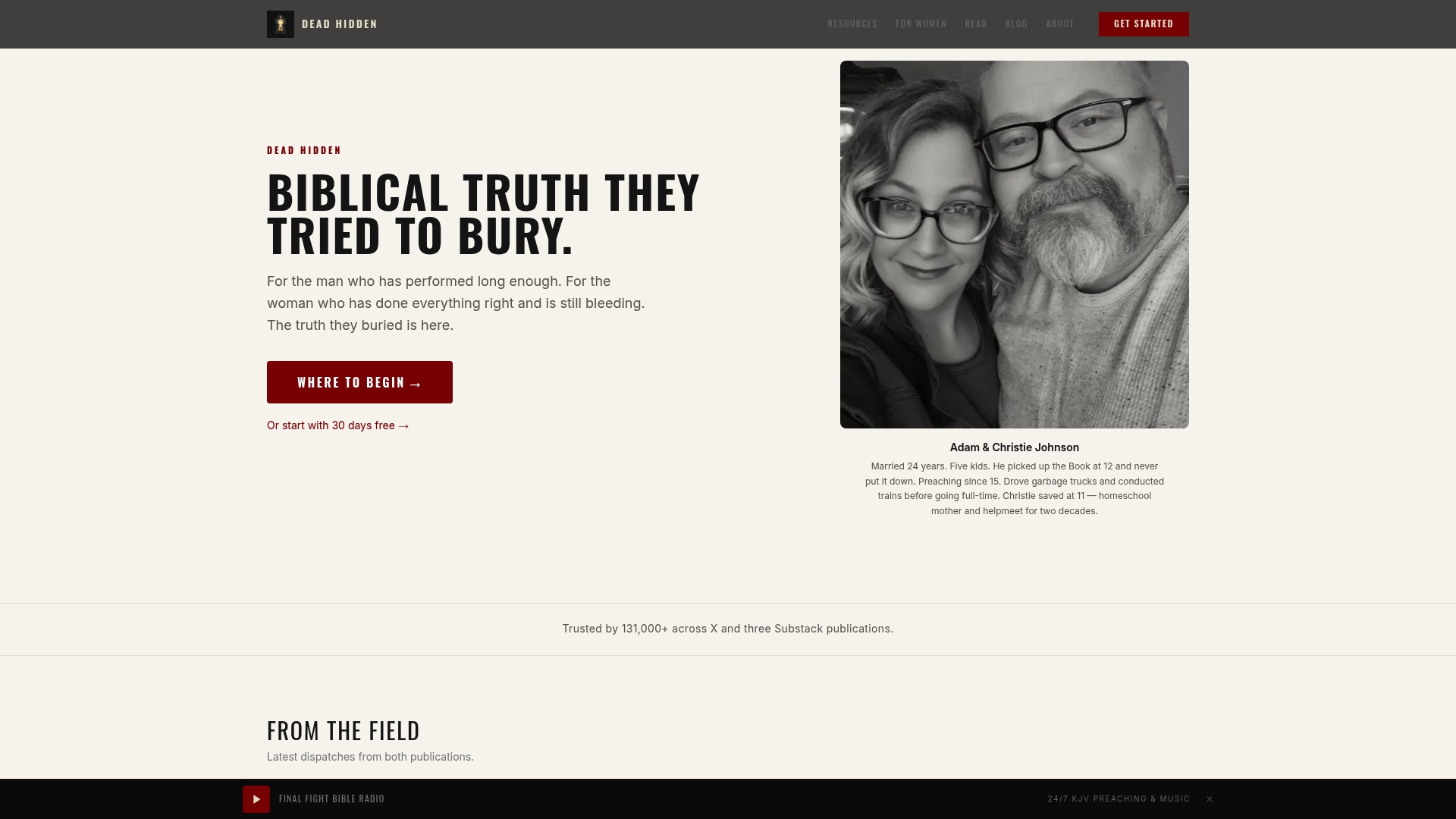
Dead Hidden Ministries has built a set of resources specifically designed to take you from knowing you should study to actually doing it with depth and consistency. The Bible study guide gives you a structured, verse-by-verse method grounded in the King James Version. The Scriptural prayers resource helps you turn study into a living prayer life. And for men ready to engage Scripture with strength and purpose, the Warrior's Bible Blueprint is exactly what you need. Start today.
Frequently asked questions
Why is consistent Bible study important for Christians?
Regular study grounds believers in truth, guards against doctrinal error, and fuels genuine transformation. Conservative evangelicals prioritize inerrancy through structured, text-first engagement precisely because the stakes of getting it wrong are so high.
How does Bible study influence daily decision-making?
Scripture provides tested wisdom and clear spiritual principles that help believers evaluate choices and resist deception. Bible study enables careful evaluation of cultural messages in ways that feelings or tradition alone cannot.
Can group Bible study really help spiritual growth?
Absolutely. Group study adds accountability, broadens insight, and creates shared momentum for action. Bible study motivates participation in outreach and charitable work at levels that individual study rarely sustains on its own.
What resources can deepen my Bible study?
Structured guides, field manuals, and verse-by-verse study plans give you a repeatable method that moves beyond surface reading into genuine application and doctrinal understanding.
Recommended
- How Bible Study Guides Unlock Deeper Scripture Understanding
- Essential Bible study checklist: steps for deeper understanding
- How to study the Bible for doctrinal clarity: 5 steps
- How to Study the Bible in the KJV: A Step-by-Step Method That Actually Works | Dead Hidden | Dead Hidden Ministries
- 7 Key Benefits of Purpose-Driven Living for Fulfillment