

Every sincere believer reaches a point where the noise becomes overwhelming. Conflicting sermons, trending theology on social media, and well-meaning but theologically careless friends all compete for your allegiance. The Word of God is not silent, but the confusion surrounding it often is. This guide cuts through that confusion. We have mapped out a step-by-step approach, grounded in scripture and refined through serious doctrinal study, to help you discern biblical truth with confidence, humility, and precision. Whether you are a seasoned student of the Word or newly committed to deeper understanding, these steps will sharpen your discernment and guard your faith.
Table of Contents
- Preparing your heart and mind for biblical discernment
- Identifying trustworthy sources and testing teaching
- Studying scripture in context: frameworks and methods
- Verifying scriptural truth and applying wisdom to daily life
- A fresh perspective: the uncomfortable truth about scriptural discernment
- Take the next step with Dead Hidden Ministries
- Frequently asked questions
Key Takeaways
| Point | Details |
|---|---|
| Start with humility | Prayerful readiness and humility open the door to deeper scriptural truth. |
| Test all teachings | Always compare teachings with foundational biblical doctrine for authenticity. |
| Context matters | Studying scripture in context prevents misinterpretation and error. |
| Apply wisdom daily | Verified scriptural understanding guides real-life decisions and relationships. |
| Engage deeper resources | Use guides, commentaries, and ministry support for ongoing discernment and growth. |
Preparing your heart and mind for biblical discernment
Before you open your Bible with any expectation of clarity, your heart must be rightly positioned. This is not sentiment. This is doctrine. James 1:5 declares: "If any of you lack wisdom, let him ask of God." That asking begins with a posture of genuine submission, not intellectual conquest.
Discernment is not a skill you manufacture. It is a gift you receive and cultivate through spiritual readiness. Most Christians approach scripture as if it were a problem to be solved on their own terms. That approach produces pride, not wisdom. You must come broken, surrendered, and dependent on the Holy Spirit to illuminate what the text actually says.
Here are the foundational prerequisites every Bible student must have in place before attempting serious scriptural study:
- Genuine salvation: You must be born again. The natural man cannot receive the things of the Spirit (1 Corinthians 2:14).
- Repentance of sin: Unconfessed sin clouds the mind. Confession precedes clarity.
- A submitted will: You must be willing to accept what the text says, even when it confronts your preferences.
- Dependence on the Holy Spirit: He is your Teacher. John 16:13 promises that the Spirit will guide you into all truth.
- Regular, consistent prayer: Not a ritual opener, but a genuine conversation with God about what you are seeking.
Prayer and humility are essential for interpreting biblical truth accurately. Without them, the most gifted intellect will produce only clever error.
Your motive matters enormously. Are you studying to win an argument, or to know God? Are you seeking confirmation of what you already believe, or are you genuinely open to correction? The Bible study checklist we recommend addresses motive as the very first category because it shapes everything downstream.
For believers walking through seasons of spiritual crisis, prayers for crisis faith can help you re-anchor your heart before study begins.
Pro Tip: Start each study session with five minutes of focused, silent prayer. Surrender your conclusions before you form them. Ask the Lord to correct you, not just to confirm you. That shift alone will transform your study.
Identifying trustworthy sources and testing teaching
Spiritual readiness prepares you. But preparation without discernment of outside voices leaves you vulnerable. Not every teacher who cites scripture is teaching scripture. This is not paranoia. It is biblical instruction. 1 John 4:1 commands: "Beloved, believe not every spirit, but try the spirits whether they are of God: because many false prophets are gone out into the world."
Testing teaching against scripture is the bedrock of uncovering biblical truth, and every believer is responsible for doing it, regardless of how popular or credentialed the teacher may be.
Here is a practical framework for evaluating any teaching source:
- Does it align with the whole counsel of God? A trustworthy teacher does not cherry-pick. They handle the full scope of scripture.
- Does it rely on the original biblical text? Cross-check claims with a faithful translation. We advocate strongly for the King James Version as the preserved Word in English.
- Does it maintain doctrinal consistency? Compare new teachings with foundational doctrines such as the atonement, resurrection, and the nature of salvation.
- Who is the teacher accountable to? A lone voice with no accountability is a warning sign.
- Does it produce fruit? Sound teaching leads to holiness, not license or spiritual passivity.
Use this comparison when evaluating sources:
| Trustworthy sources | Questionable sources |
|---|---|
| Grounded in whole-Bible context | Builds doctrine from isolated verses |
| Transparent about theological tradition | Vague or evasive about doctrinal roots |
| Consistent with historical orthodoxy | Frequently revises position based on culture |
| Encourages personal Bible reading | Discourages questioning the teacher |
| Accountable to a body of believers | Operates in isolation with no oversight |
For deeper foundational study, the Bible study guides we have assembled walk you through doctrinal testing with precision.
Pro Tip: Before adopting any new teaching, spend time cross-referencing its key claims with at least three other passages from different books of the Bible. If the teaching cannot survive that process, it does not belong in your doctrinal framework.
Studying scripture in context: frameworks and methods
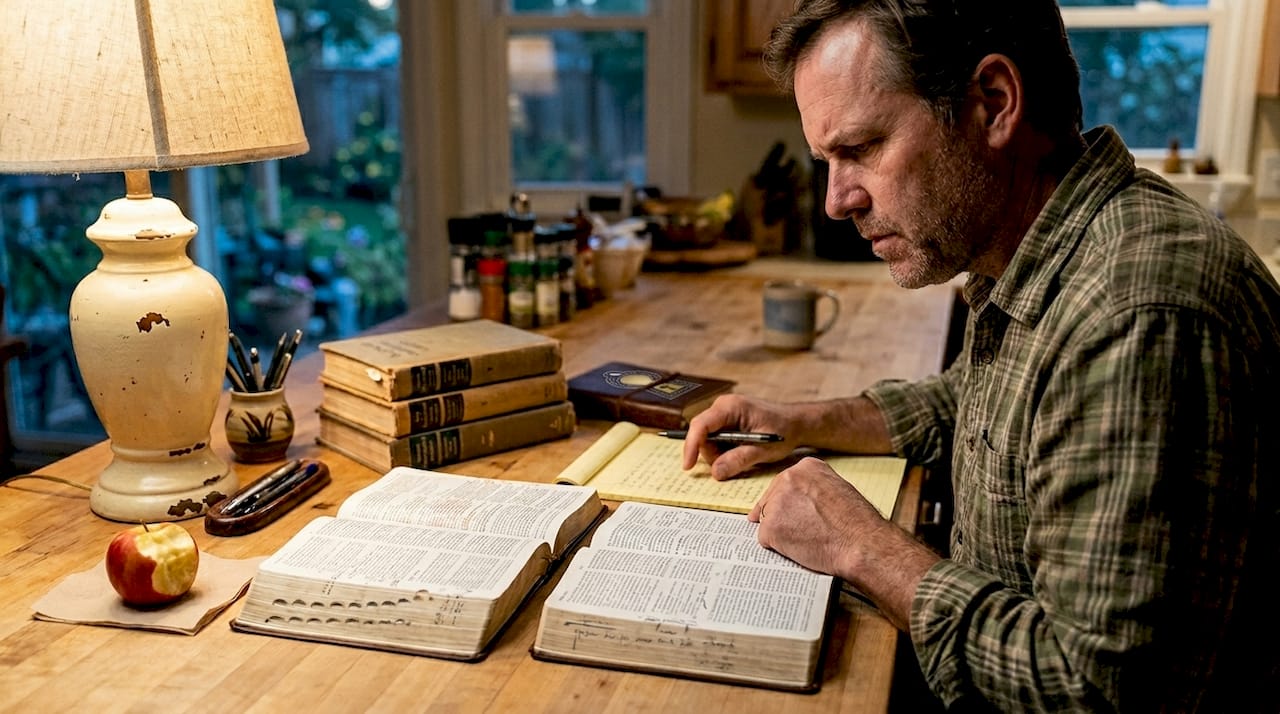
Even with the right heart and discerning evaluation of sources, you still need structured methods for your personal study. Frameworks matter. Without them, even sincere believers fall into proof-texting, which means lifting a verse out of its surrounding context to support a predetermined conclusion. Proof-texting is one of the most common and most dangerous errors in popular Christianity today.
Cross-referencing and historical context are key tools for understanding what a passage actually means, not what you want it to mean. This distinction is critical.
The three-step observation, interpretation, and application framework is the most reliable method for accurate study:
- Observation: What does the text actually say? Read it slowly. Identify key words, repeated phrases, and grammatical structure.
- Interpretation: What did the author mean in its original context? Consider the historical setting, the audience, and the literary genre.
- Application: What does this truth require of you today? Application must flow from interpretation, never precede it.
Here are common mistakes to avoid:
- Reading your own cultural assumptions into ancient texts
- Treating poetic or apocalyptic language as straightforward historical narrative
- Ignoring the dispensational context of a passage
- Relying on a single commentary without cross-referencing others
- Skipping observation and jumping straight to application
The following tools support thorough, context-based study:
| Tool | Purpose | Example |
|---|---|---|
| Strong's Concordance | Word-level analysis of original Hebrew and Greek | Identifying precise meaning of "grace" in Ephesians 2:8 |
| Biblical commentary | Historical and theological context | Matthew Henry, John Gill |
| Cross-reference Bible | Tracing themes across the whole Word | Treasury of Scripture Knowledge |
| Scripture study guide | Structured pathway through key doctrines | Dead Hidden study resources |
The faith versus works clarity test available through Dead Hidden is a focused example of how structured framework study resolves one of the most contested doctrinal questions in Christianity.
Verifying scriptural truth and applying wisdom to daily life
Studying scripture accurately is necessary, but incomplete without verification and application. You can know doctrine in your mind and still fail to live it. The goal of discernment is not intellectual mastery. It is transformed obedience.
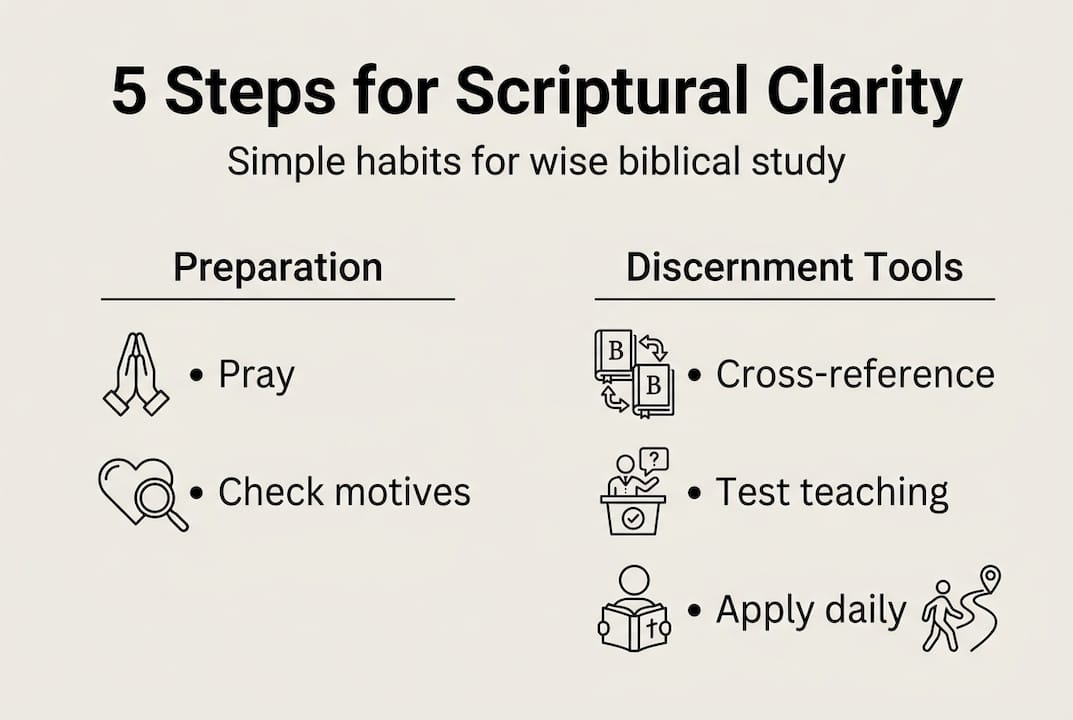
Applying scriptural truth requires both verification and practical wisdom. These two elements must work together. Verification confirms that your interpretation is sound. Practical wisdom ensures that sound interpretation shapes real decisions.
Verification steps:
- Cross-check your interpretation with multiple scripture passages on the same subject
- Seek counsel from mature, doctrinally sound believers who will speak truth, not comfort
- Evaluate consistency with Christ's teachings as recorded in the Gospels
- Examine the fruit produced by living out your interpretation over time
- Test against the whole arc of redemptive history from Genesis through Revelation
Practical ways to apply scriptural truth daily:
- Begin each morning by reading one passage and asking, "What does God require of me today?"
- Keep a written record of convictions formed through study, and revisit them monthly
- Allow scripture to arbitrate disagreements in your home, workplace, and relationships
- Use Christian decision-making frameworks when facing major life choices
- Let scripture's impact on marriage inform how you relate to your spouse and household
Critical note: Truth divorced from action is not wisdom. It is information. The believer who discerns accurately and acts faithfully is the one who builds on the rock, not the sand. Every verification step should lead you closer to obedience, not merely to more knowledge.
Research in evangelical communities confirms that believers who consistently use structured discernment frameworks are significantly more likely to maintain doctrinal stability and resist false teaching over time. The discipline is not optional. It is protective.
A fresh perspective: the uncomfortable truth about scriptural discernment
Here is what most guides on discernment will not tell you: the process is deeply uncomfortable, and that discomfort is the point.
We have seen, in ministry and in personal study, that the believers who struggle most with discernment are not the ones lacking intelligence. They are the ones unwilling to be corrected by the text. They read summaries of scripture instead of scripture itself. They consume other people's conclusions rather than wrestling with the Word firsthand.
Many Christians struggle with discernment due to cultural distractions and reliance on secondhand interpretations. That is a hard truth worth sitting with. The podcast recap, the devotional app, the trending sermon clip, none of these replace direct, sustained engagement with the text itself.
The Bible reading protocol we offer exists precisely because most believers have never been given a structured, disciplined system for reading the whole Word in context. Real discernment costs you something: your assumptions, your comfort, and sometimes your long-held beliefs. Pay that cost. The reward is a faith that cannot be shaken by every wind of doctrine.
Take the next step with Dead Hidden Ministries
You have just walked through a serious, scripturally grounded framework for developing real discernment. Do not let it stop here. The most dangerous moment after receiving truth is failing to act on it.
Dead Hidden Ministries exists to equip believers like you with the resources, tools, and biblical depth needed for this kind of serious study. Whether you are beginning with studying the Bible from the ground up, exploring what it means to contend for biblical femininity, or ready to pursue the hidden truths of scripture that mainstream Christianity has neglected, we have resources prepared for your next step. Come ready to be challenged. Come ready to grow.
Frequently asked questions
What are the most common mistakes when trying to discern scriptural truth?
The biggest mistakes are taking verses out of context, relying on popular opinions, and neglecting prayerful study. Contextual study is the foundation of sound interpretation and guards against all three errors.
How can I know if a teaching aligns with true scripture?
Test it against biblical doctrine, cross-reference it with multiple scripture passages, and seek confirmation from trusted, doctrinally grounded believers. Testing teaching against scripture is not optional; it is a biblical command.
What tools or resources should every Christian use for scriptural discernment?
Concordances, commentaries, Bible study guides, and prayerful reflection form the core toolkit. Bible study guides and structured frameworks aid deeper understanding and doctrinal consistency over time.
How can I apply scriptural truth to my daily decisions?
Use verification steps, consult scripture on the specific area of decision, seek godly counsel, and act in consistent alignment with Christ's teachings. A structured decision-making framework grounds each choice in biblical wisdom rather than personal preference.