

Confusion about marriage roles is not a new problem, but the cultural noise surrounding the subject has never been louder. Scripture does not leave believers without direction. The Bible offers specific, grounded instruction for husbands and wives, rooted not in sociology or shifting opinion, but in the character of God Himself. This article maps out what those roles actually are, what key passages teach, and how faithful couples can apply these truths with both clarity and grace, cutting through the cultural confusion to get back to what God's Word actually says.
Table of Contents
- How scripture frames marriage roles
- Headship and sacrificial love: The role of the husband
- Submission, respect, and strength: The role of the wife
- Mutual honor and spiritual partnership
- Comparison of marriage roles in scripture
- Seeing past stereotypes: A biblical perspective on marriage roles
- Explore more biblical resources for your marriage
- Frequently asked questions
Key Takeaways
| Point | Details |
|---|---|
| Scripture defines roles | Biblical passages, not cultural trends, set the standards for marriage roles. |
| Husbands model Christ's love | Christian husbands are called to lead by sacrificial care, echoing Christ’s love for the church. |
| Wives reflect godly submission | Christian wives display strength, virtue, and respectful partnership through scriptural submission. |
| Both are equal heirs | Husbands and wives share spiritual inheritance and are called to honor one another as co-heirs. |
| Mutual partnership | Healthy Christian marriage is built on both distinct roles and spiritual unity for God’s glory. |
How scripture frames marriage roles
Before we can properly identify the distinct roles, we must first establish the standard by which they are evaluated. The answer is simple: scripture alone. Not cultural tradition, not social research, not the shifting expectations of any given generation. Scripture.
The marriage roles in the Bible are not cultural suggestions layered on top of Hebrew or Greek customs. They are deliberate revelations of God's design. And the Christian marriage purpose goes far beyond companionship or social stability. Marriage in scripture is a living picture of Christ's relationship to His church.
The foundational texts are concentrated in a cluster of epistles. Each passage carries its own emphasis:
- Ephesians 5:22-33: The most detailed treatment, modeling headship on Christ's love for the church and submission on the church's devotion to Christ.
- 1 Peter 3:1-7: Addresses both wives and husbands, calling wives to a gentle spirit and husbands to honor women as co-heirs of grace.
- Colossians 3:18-19: A brief but direct instruction, commanding wives to submit as fitting in the Lord, and husbands to love and avoid harshness.
- Titus 2:3-5: Introduces a generational element, calling older women to model and teach godly marriage to younger women.
The key scripture passages include Ephesians 5:22-33, 1 Peter 3:1-7, Colossians 3:18-19, and Titus 2:3-5. Together these texts present a unified vision.
"Wives, submit to your own husbands, as to the Lord. For the husband is the head of the wife even as Christ is the head of the church." (Ephesians 5:22-23, ESV)
This is not a lone proof text. It is part of a symphony of scripture, each passage reinforcing what the others declare. When evaluating any teaching on marriage roles, these are the passages you bring to the table first. Anything that contradicts or undermines them should be examined with great caution.
Headship and sacrificial love: The role of the husband
Headship is perhaps the most misunderstood word in the entire biblical marriage conversation. Modern culture either dismisses it as oppressive or twists it into a justification for control. Scripture does neither.
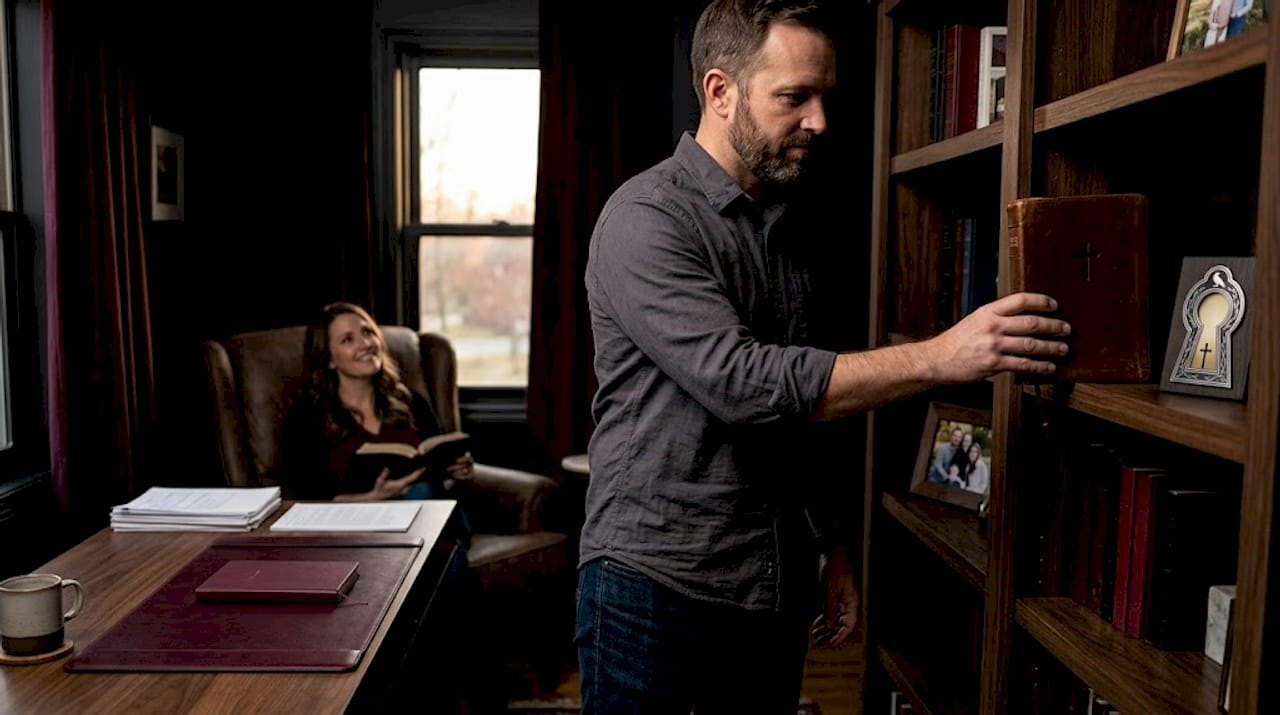
Husbands are called to be the head of the wife as Christ is head of the church, loving their wives sacrificially as Christ loved the church. Let that sink in. Christ gave His life for the church. That is the standard. Not dominance. Not command-and-control authority. Sacrificial, self-giving love.
The husband's biblical role is defined by three primary responsibilities rooted directly in Ephesians 5 and Colossians 3:
- Loving leadership: He leads not for his own benefit but for the good of his wife and household. His decisions bear weight and responsibility.
- Protection and provision: The husband stands as a spiritual and physical guardian of his home. He does not retreat when difficulty comes.
- Spiritual guidance: He is not passive in the spiritual life of his family. He prays, he leads in the Word, and he takes responsibility for the moral direction of his household.
- Sacrificial service: He does not wait to be served. He serves first, because Christ, his model, "came not to be served but to serve" (Matthew 20:28).
"Husbands, love your wives, as Christ loved the church and gave himself up for her." (Ephesians 5:25, ESV)
That phrase, "gave himself up for her," is the anchor of the husband's calling. It demands death to self-interest. No scripture passage grants a husband license to be harsh, dismissive, or domineering.
Pro Tip: Use the godly marriage checklist to audit your own practice of headship against the biblical standard, not cultural assumptions. Ask yourself whether your leadership looks more like Christ's servant-love or the world's idea of authority.
It is also worth noting that Colossians 3:19 contains a specific warning: "Husbands, love your wives, and do not be harsh with them." The warning exists because harshness is a real temptation. A man who leads well, however, channels his strength into protection and blessing, not intimidation. The measure of his headship is how his wife flourishes under it. The way scripture and Christian marriage interact reveals that biblical authority always serves, never exploits.
Submission, respect, and strength: The role of the wife
Submission has become one of the most controversial words in Christian conversation. That controversy is largely the product of misunderstanding, not honest engagement with the text. Biblical submission is not weakness. It is not silence. It is not the erasure of a woman's wisdom, voice, or personhood.
Wives are to submit to their own husbands as to the Lord, reflecting the church's submission to Christ. The church does not submit to Christ because it is inferior. It submits because that is the divinely ordered relationship, rooted in trust and love. The same logic applies in marriage.
The meaning of biblical submission is active, not passive. It involves:
- Honoring her husband's leadership: Recognizing his role without undermining it publicly or privately.
- Spiritual partnership: Bringing wisdom, discernment, and prayer into the marriage, not withdrawing from it.
- Modeling Christlike character: A wife who exhibits a "gentle and quiet spirit" (1 Peter 3:4) is displaying inner strength, not weakness. That spirit is precious before God.
- Generational faithfulness: Titus 2 makes clear that godly femininity carries a teaching mandate.
"Wives, submit to your husbands, as is fitting in the Lord." (Colossians 3:18, ESV)
Titus 2:3-5 calls older women to teach younger women to love their husbands and children, to be self-controlled, pure, kind, and submissive. This is a complete vision of a woman who is not diminished by her role but dignified by it. She is a teacher, a nurturer, a keeper of the home, and a living witness to the grace of God.
Pro Tip: Study the scriptural femininity resources that go verse-by-verse through what the Bible says about womanhood. The world has distorted this image. Scripture restores it.
The wife's role is demanding. It requires spiritual maturity, genuine love, and deep trust in God's design. A woman walking in biblical femininity is not diminished. She is positioned at the center of one of the most powerful pictures of grace in all of creation: the church's loving devotion to Christ.
Mutual honor and spiritual partnership
Here is where many teachings on marriage roles fall short. They describe the distinct roles with precision but fail to emphasize the profound equality and mutual honor that scripture also commands. Both husband and wife are called to honor each other. Not one at the expense of the other.
In 1 Peter 3, husbands are instructed to live with their wives with understanding, honoring them as co-heirs of the grace of life. Co-heirs. Equal inheritors of eternal grace. The husband does not receive more of God's grace because he leads. The wife does not receive less because she submits. Before God, they stand on equal ground.
Colossians 3:18-19 instructs wives to submit as fitting in the Lord and husbands to love without harshness. These instructions balance each other. Neither spouse is given an absolute position over the other in terms of spiritual worth or standing before God.
The marriage covenant and roles are two sides of the same covenant reality. Distinct roles do not mean unequal dignity. Consider these four practical expressions of mutual spiritual partnership that scripture supports:
- Pray together regularly: 1 Peter 3:7 implies shared spiritual life. Prayer unites what role distinctions might otherwise divide.
- Seek the Word together: Spiritual partnership means both spouses come to scripture not as adversaries but as co-learners under God's authority.
- Affirm one another's calling: A husband who regularly honors his wife's wisdom and gifts strengthens, not weakens, his own leadership. A wife who genuinely respects her husband's role invites his best leadership.
- Serve each other sacrificially: Both Ephesians 5 and 1 Peter 3 call each spouse toward other-centered living. This is the daily practice of marriage roles lived well.
This partnership does not erase the distinction between headship and submission. It deepens it, giving those roles their fullest and most beautiful expression. When a husband and wife both seek to outdo each other in service and honor, the result is a marriage that genuinely reflects Christ and the church.
Comparison of marriage roles in scripture
The passages examined in this article collectively produce a clear picture. The table below summarizes the primary responsibilities and characteristics assigned to each spouse in scripture.
| Dimension | Husband's role | Wife's role |
|---|---|---|
| Primary calling | Sacrificial, Christlike love (Eph. 5:25) | Respectful submission (Eph. 5:22) |
| Authority model | Christ as head of the church | Church's devotion to Christ |
| Spiritual posture | Lead, protect, guide spiritually | Honor, support, strengthen the home |
| Toward the spouse | Love without harshness (Col. 3:19) | Submit as fitting in the Lord (Col. 3:18) |
| Shared identity | Co-heir of grace (1 Pet. 3:7) | Co-heir of grace (1 Pet. 3:7) |
| Generational calling | Model Christlike manhood | Teach younger women (Titus 2:3-5) |
| Spiritual equality | Equal before God | Equal before God |
Key insight: Every cell in that table is anchored in an explicit biblical text. The key passages covering Ephesians 5:22-33, 1 Peter 3:1-7, Colossians 3:18-19, and Titus 2:3-5 leave no role ambiguous or undefined.
Notice also what is absent from this table: domination, passivity, superiority, inferiority. None of these appear in the biblical text. Both roles require Christlike character. Both require courage. Neither role is the easy road.
The biblical headship teaching examined verse-by-verse in the King James Bible confirms the same pattern. Headship is servant leadership. Submission is dignified devotion. This is the consistent, unified witness of scripture on marriage roles.
Seeing past stereotypes: A biblical perspective on marriage roles
Here is the uncomfortable truth that most marriage conversations avoid: both modern egalitarianism and cultural traditionalism miss the point. Egalitarianism erases the distinct roles scripture clearly assigns. Cultural traditionalism often mistakes authority for harshness and submission for silent compliance. Neither view honors the full weight of what God has revealed.
Biblical roles are not about gender stereotypes. They are about Christlike character expressed through specific relational responsibilities. A husband who demands submission from his wife while refusing to love sacrificially has inverted the very design he claims to defend. A wife who resists submission while expecting her husband to lead Christlikely is doing the same.
The deeper issue is this: true headship and true submission both require humility. They require dying to self. The husband must die to self-interest and comfort to lead sacrificially. The wife must die to self-assertion and pride to honor her husband's leadership. Both movements are costly. Both are Christlike.
This is not a popular message. But biblical marriage insight reveals that the fullness of God's design is both more demanding and more liberating than any cultural caricature. When couples actually live this out, not as a power arrangement but as a mutual covenant of grace, the result is a marriage of unusual depth and strength.
Navigating these roles well requires courage to be counter-cultural, grace to extend forgiveness when you fall short, and an ongoing commitment to scripture as your final authority on what marriage is and what it demands of you.
Explore more biblical resources for your marriage
The truths covered in this article are only the beginning. Living them out daily requires ongoing study, community, and tools built on the actual Word of God.

At Dead Hidden Ministries, you will find resources specifically designed to help you go deeper. From a detailed biblical femininity deep dive that traces womanhood verse by verse, to step-by-step guides on how to study the Bible deeply for yourself, everything is built to equip serious Bible believers. These are not surface-level devotionals. They are doctrinal tools forged for couples who want their marriage grounded in unfiltered scriptural truth. If you are ready to move from cultural confusion into biblical clarity, start there.
Frequently asked questions
What are the main biblical passages about marriage roles?
The foundational passages are Ephesians 5:22-33, 1 Peter 3:1-7, Colossians 3:18-19, and Titus 2:3-5, each providing essential instruction on both husbands and wives.
Are husbands expected to dominate their wives?
No. Scripture calls husbands to lead sacrificially as Christ loved the church, a standard that demands self-giving love, not domination or control.
Does biblical submission mean wives have no voice or influence?
Not at all. Titus 2:3-5 shows that wives are called to teach, model godliness, and influence the next generation, making submission a position of significant spiritual strength, not silence.
Are husbands and wives spiritually equal in Christ?
Yes. 1 Peter 3 describes husband and wife as co-heirs of the grace of life, confirming their complete spiritual equality before God regardless of their distinct relational roles.
How can couples put scriptural roles into practice?
By studying key passages together, praying with and for each other consistently, and applying biblical principles with genuine humility and mutual respect, choosing scripture over cultural convenience at every point of tension.