
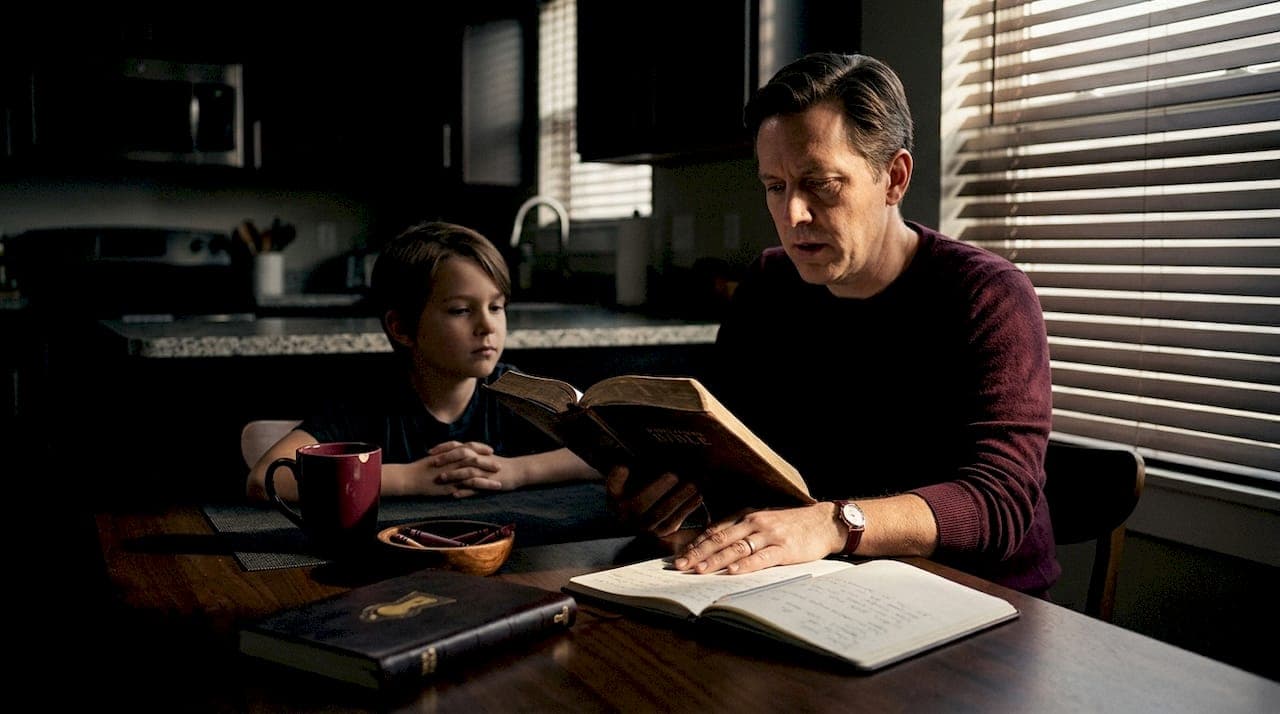
Teaching children the Bible faithfully is one of the most serious responsibilities a parent or educator can carry. Yet so many struggle with the same tension: how do you make Scripture accessible to young minds without watering down doctrine or reducing God's Word to a cartoon? Too often, the choice feels like a false one between dry recitation and empty entertainment. This guide walks you through a complete, step-by-step approach to children's Bible instruction that is both engaging and doctrinally grounded, from preparation and lesson delivery to troubleshooting and measuring true understanding.
Table of Contents
- Get ready: What you need before teaching
- Step-by-step: Teaching the Bible with clarity and depth
- Troubleshooting: Common mistakes and how to avoid them
- How to verify learning and inspire lasting faith
- An overlooked reality: Authenticity always trumps entertainment
- Equip yourself with trusted Bible teaching resources
- Frequently asked questions
Key Takeaways
| Point | Details |
|---|---|
| Prepare with purpose | Gather doctrinally sound tools and define your teaching goals for meaningful Bible lessons. |
| Follow clear steps | A structured approach—context, reading, discussion, application—helps ensure lasting understanding. |
| Avoid common pitfalls | Don't let entertainment or excessive simplification undermine scriptural faithfulness. |
| Check for real learning | Use questions and creative reviews to see if children are grasping biblical truths. |
| Choose authentic resources | Trustworthy, Scripture-first materials empower families and ministries to teach with confidence. |
Get ready: What you need before teaching
Before a single lesson begins, preparation is everything. You would not build a house without a blueprint, and you should not open Scripture with a child without first knowing what you are trying to accomplish.
The right translation matters. The King James Version remains the gold standard for doctrinal precision and textual integrity. For younger children, read the KJV aloud and then explain meaning in plain language. Do not replace it. Explain it. That practice itself teaches children that Scripture carries weight and demands careful attention.
Structured Bible learning sets a strong foundation for children's spiritual growth, and that foundation begins with having the correct tools assembled before you ever sit down together. A well-stocked teaching space includes far more than a Bible alone.
What to gather before you begin:
- A King James Bible (one for the teacher, ideally one for the child)
- A dedicated notebook for the child to record verses, questions, and reflections
- A simple Bible study checklist to track what has been covered and what comes next
- Age-appropriate maps of the Holy Land for geographic context
- A concordance or basic Bible dictionary for reference
- A quiet, consistent learning environment free from digital distraction
Setting objectives before each session is equally critical. Ask yourself: what specific biblical truth do I want this child to understand today? Is it the holiness of God? The reality of sin? The nature of atonement? Vague goals produce vague lessons. Specific doctrinal targets produce specific, lasting understanding.
| Resource type | Physical option | Digital option |
|---|---|---|
| Bible translation | KJV print Bible | KJV app or PDF |
| Study structure | Printed checklist | Downloadable guide |
| Lesson tracking | Notebook or journal | Spreadsheet or form |
| Reference tools | Concordance, Bible dictionary | Online lexicon |
| Teaching support | Curriculum guide | Expository Bible study guide |
Pro Tip: Spend ten minutes before each lesson reviewing what was covered in the previous session. This simple habit cements retention and signals to the child that what they learned last week still matters today.
Step-by-step: Teaching the Bible with clarity and depth
Once your materials and goals are in order, the actual teaching process requires a proven, repeatable structure. Consistency is not the enemy of engagement. It is the foundation of it. When children know what to expect, they can focus their mental energy on the content rather than the process.
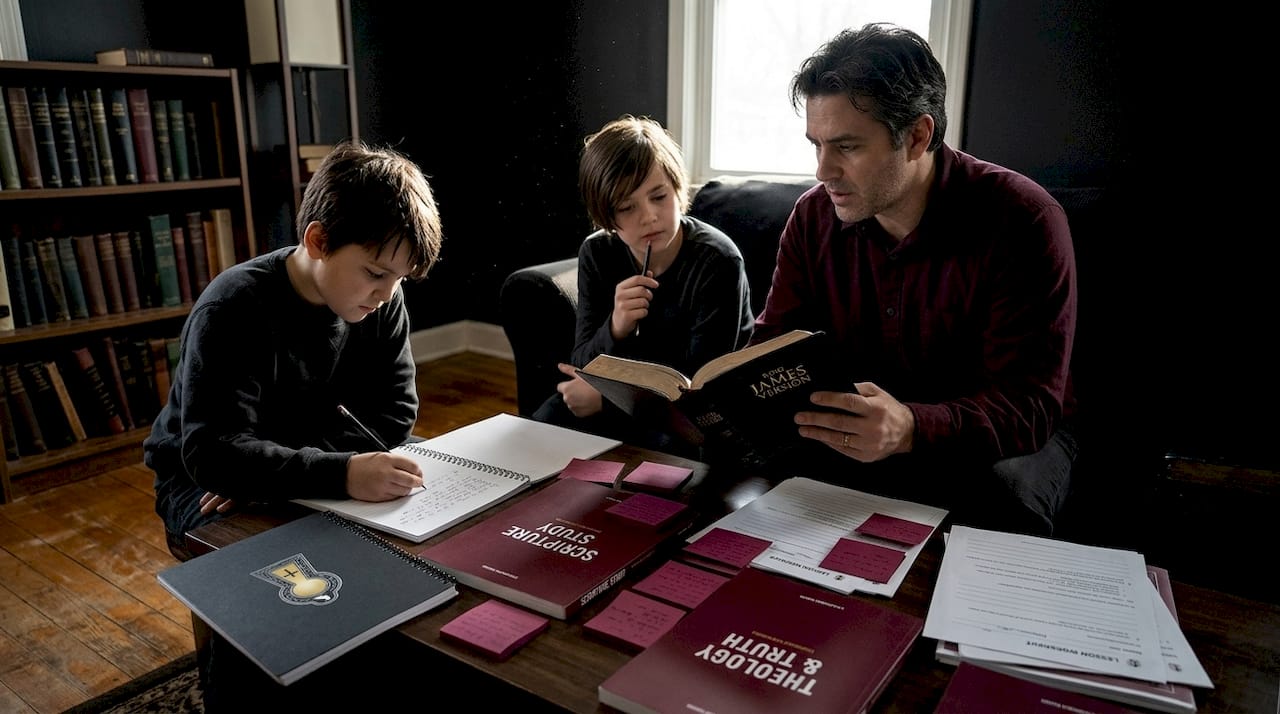
Personal Bible study strategies can be powerfully adapted for children, helping them connect with Scripture in a way that is meaningful rather than mechanical. The goal is not recitation. The goal is revelation: helping a child see what the text actually says and why it matters.
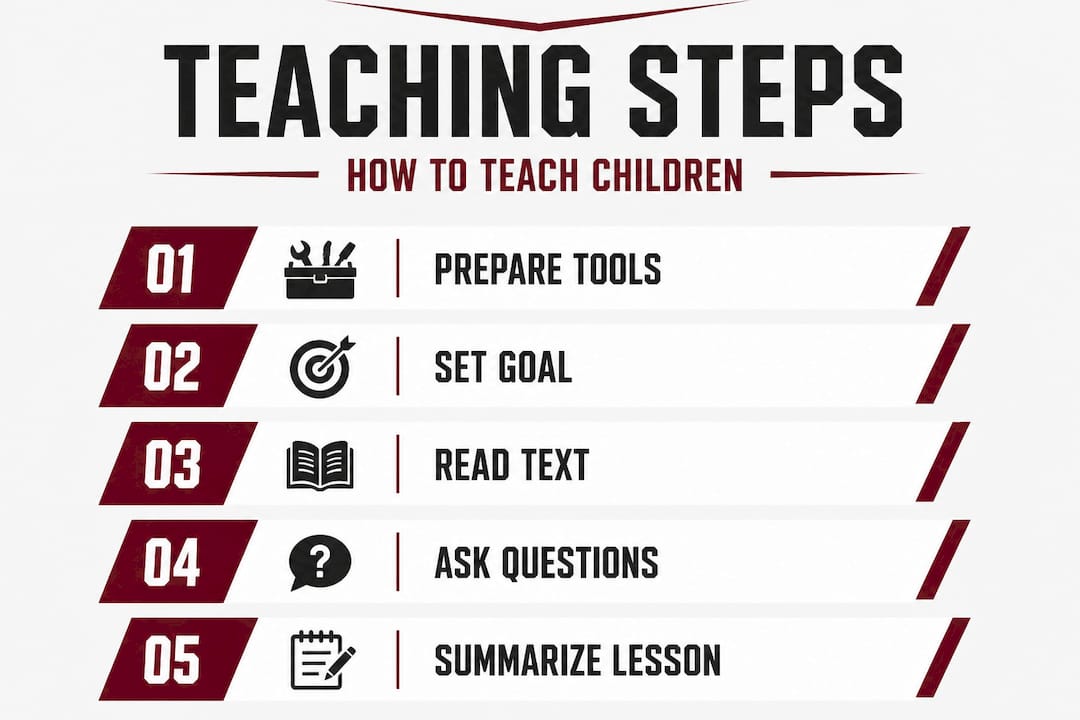
A proven, repeatable teaching sequence:
- Select the passage with intention. Choose a text that fits your doctrinal objective. Do not drift from book to book randomly. Work through a Gospel, an epistle, or a narrative section systematically.
- Provide context before reading. Tell the child who wrote the passage, when, to whom, and why. Context is not a detour. It is the key to comprehension.
- Read the passage aloud together. Have the child follow along. Pause at difficult words and define them plainly. This builds vocabulary and reverence simultaneously.
- Ask the child what they heard. Before you explain anything, let them tell you what they understood. This reveals where clarity is needed.
- Explain meaning verse by verse. Keep explanations concise but doctrinally precise. Avoid vague spiritualization. Stick to what the text says.
- Apply the truth to real-life examples. Ask: "How does this apply to what you did at school this week?" Real application anchors doctrine in daily experience.
- Close in prayer. Pray directly about what was just learned. This models that Scripture is not merely studied. It is lived.
Consider two distinct approaches as you build your teaching style:
| Approach | Teacher-led | Interactive |
|---|---|---|
| Structure | High, consistent | Flexible, responsive |
| Best for | Doctrine, theology, precision | Stories, application, younger children |
| Pros | Ensures accuracy, guards against distortion | Builds ownership, sparks curiosity |
| Cons | Can become passive for the child | Can drift if not anchored to text |
| Ideal combination | Use for doctrinal foundations | Use for review and application sessions |
The wisest teachers blend both. Anchor every interactive discussion in the text itself. If a child's observation wanders from what the passage actually says, lovingly redirect. That is not rigid. That is faithful. You can also strengthen your approach by studying KJV study methods that deepen your own grasp of the text before you teach it.
Pro Tip: After the lesson ends, ask the child to write one sentence in their notebook summarizing what God said in that passage. Over months, this builds a personal record of biblical understanding that is deeply motivating to review.
Troubleshooting: Common mistakes and how to avoid them
A teaching routine is valuable only if it is built on truth. With a solid lesson structure in place, knowing which errors to avoid is what separates a teacher who plants seeds from one who plants confusion.
Maintaining doctrinal accuracy while simplifying complex concepts is crucial in children's Bible teaching. Simplification is not the same as distortion. You can explain the doctrine of justification to a ten-year-old without turning it into a story about feelings. The challenge is to lower the vocabulary without lowering the theology.
The most common mistakes in children's Bible instruction:
- Over-simplifying doctrine to the point of error. Telling a child that Jesus "died because he loved us" is incomplete. He died as a substitutionary atonement for sin. Even young children can grasp this if it is explained clearly.
- Turning every lesson into entertainment. Games, crafts, and activities have their place. But when the activity becomes the lesson, doctrine disappears. The Word is the content. Everything else is a vehicle.
- Neglecting the Old Testament. The New Testament is incomprehensible without the Old. Do not skip covenants, prophecy, or law. Teach them as the foundation they are.
- Avoiding hard texts. Children can and should learn about judgment, sin, hell, and holiness. Shielding them from these truths leaves them unprepared for the full counsel of God.
- Failing to model personal application. If you do not apply Scripture to your own life visibly, children will absorb the idea that the Bible is academic, not transformative.
- Skipping prayer. Prayer before and after the lesson frames Bible study as a spiritual act, not merely an educational one.
"Buy the truth, and sell it not; also wisdom, and instruction, and understanding." (Proverbs 23:23, KJV)
Truth is not negotiable, even when the audience is young. In fact, the younger the audience, the more important it is to establish truth correctly from the start. Unlearning a doctrinal error a child absorbed at age seven is far harder than teaching the truth clearly at age seven in the first place.
Consult Bible study accuracy tips regularly as you develop your curriculum. Accuracy is not an obstacle to engagement. It is the very thing that makes Scripture worth engaging with.
How to verify learning and inspire lasting faith
Avoiding pitfalls brings you to the other side of the equation: how do you know the child is truly understanding? And more importantly, how do you cultivate a love for Scripture that outlasts your teaching sessions?
Consistent spiritual engagement produces measurable benefits in character, confidence, and community-mindedness in children. This is not abstract. You will see it. Children who are taught the Bible faithfully become more truthful, more self-controlled, more willing to admit wrong and pursue right.
Practical ways to verify understanding and build lasting engagement:
- Ask the child to retell the lesson. If they can explain it in their own words, they understand it. If they cannot, more review is needed.
- Pose application questions. "What would you do differently this week based on what we just read?" ties doctrine to daily life directly.
- Encourage Scripture memorization. Not just memory tricks or rhymes. Actual verse memorization from the KJV plants the Word in the heart where it can do its work (Psalm 119:11).
- Assign creative projects. A child who draws a scene from Genesis or writes a short summary of a Psalm has engaged at a level far deeper than passive listening.
- Use narration regularly. The classical practice of having a student narrate back what they heard is one of the most effective comprehension tools available, and it costs nothing.
- Involve the family. When parents reinforce at home what is taught in a structured lesson, retention multiplies. Scripture discussed at the dinner table becomes Scripture that shapes the child's worldview.
- Celebrate milestones. When a child memorizes a chapter, completes a book study, or correctly explains a doctrine, acknowledge it. Spiritual milestones matter.
Key stat to consider: Studies on the benefits of Bible study consistently show that children who engage regularly with Scripture demonstrate stronger moral reasoning, greater emotional resilience, and a more defined sense of personal identity compared to peers without regular faith instruction. These are not trivial outcomes. They are the fruit of faithful, consistent investment.
Community involvement amplifies everything. When a child sees that the adults around them take the Word seriously, that Scripture is discussed, debated respectfully, and applied publicly, it removes the idea that Bible study is merely a classroom exercise. It becomes a way of life.
An overlooked reality: Authenticity always trumps entertainment
Here is something worth saying plainly. The drive to make Bible lessons "fun" has produced a generation that knows the flannel-graph version of Noah but cannot explain why the flood was an act of divine judgment or what it teaches about the holiness of God. That is a serious failure. And it was done with good intentions.
Children are more capable of theological depth than most modern curricula give them credit for. A six-year-old can understand that God is holy and sin is serious. A nine-year-old can grasp the meaning of sacrifice and substitution. A twelve-year-old can wrestle with the attributes of God with genuine intellectual and spiritual engagement. The question is never whether children can handle truth. The question is whether their teachers are willing to deliver it.
The strongest spiritual growth we observe consistently happens in families and ministries that treat children as disciples in training, not as an audience to be entertained. These are homes where Scripture is read at the table, where hard questions are welcomed rather than redirected, and where the child sees their parent genuinely wrestling with the text. That environment does something no curriculum alone can accomplish.
Biblical truth resources rooted in doctrinal accuracy create not just more knowledgeable children, but spiritually stronger ones. The goal was never to produce children who could answer Sunday school trivia. The goal is to raise up believers who know what they believe, why they believe it, and how to live by it. Authenticity in teaching, reverence for the text, and honest engagement with doctrine are what produce that outcome. Not novelty. Not spectacle. Truth, taught faithfully, is compelling enough on its own.
Equip yourself with trusted Bible teaching resources
You have now walked through a complete framework for teaching children the Bible with doctrinal integrity and genuine engagement. The next step is putting the right tools in your hands.
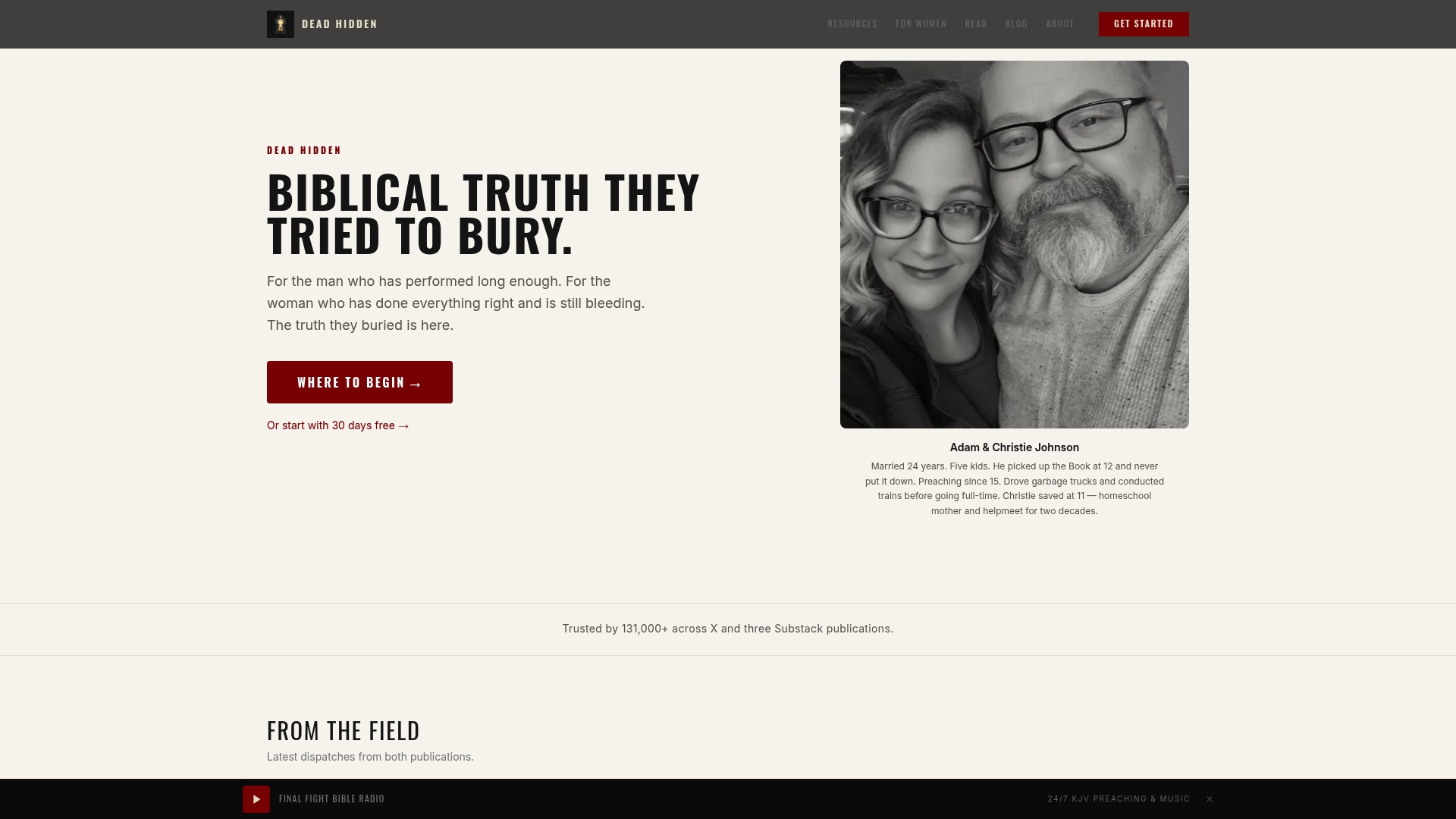
Dead Hidden Ministries offers a growing library of doctrinally sound publications built for serious Bible believers who refuse to compromise on accuracy. For hands-on instruction designed specifically to engage younger learners, explore the children's study resources that align directly with the methods outlined in this guide. These are not watered-down devotionals. They are real tools for real discipleship. Visit Dead Hidden to access video teachings, downloadable guides, and systematic studies that will sharpen your ability to teach the Word faithfully and powerfully to the next generation.
Frequently asked questions
What Bible translation is best for teaching children?
The King James Version is widely regarded for accuracy, making it the preferred choice, but the best approach is to read the KJV and explain its language in terms the child can follow.
How long should a Bible lesson for children last?
Thirty minutes is typically the ideal length, providing enough time for reading, discussion, and application while keeping attention and engagement strong throughout the session.
How can I tell if my child is actually understanding the Bible?
Ask your child to retell the lesson in their own words or connect it to a real-life situation, which reveals true comprehension far more reliably than a yes-or-no question. Consistent spiritual engagement builds measurable signs of understanding over time.
What is the biggest mistake parents or teachers make?
The most common mistake is oversimplifying doctrine to the point of error, which undermines doctrinal accuracy and leaves children with an incomplete or distorted view of Scripture that can take years to correct.
Are there free resources I can use to teach children the Bible?
Yes, many ministries provide free checklists, structured guides, and study plans, and a solid Bible study checklist is one of the best starting points for organizing any children's Bible instruction program.